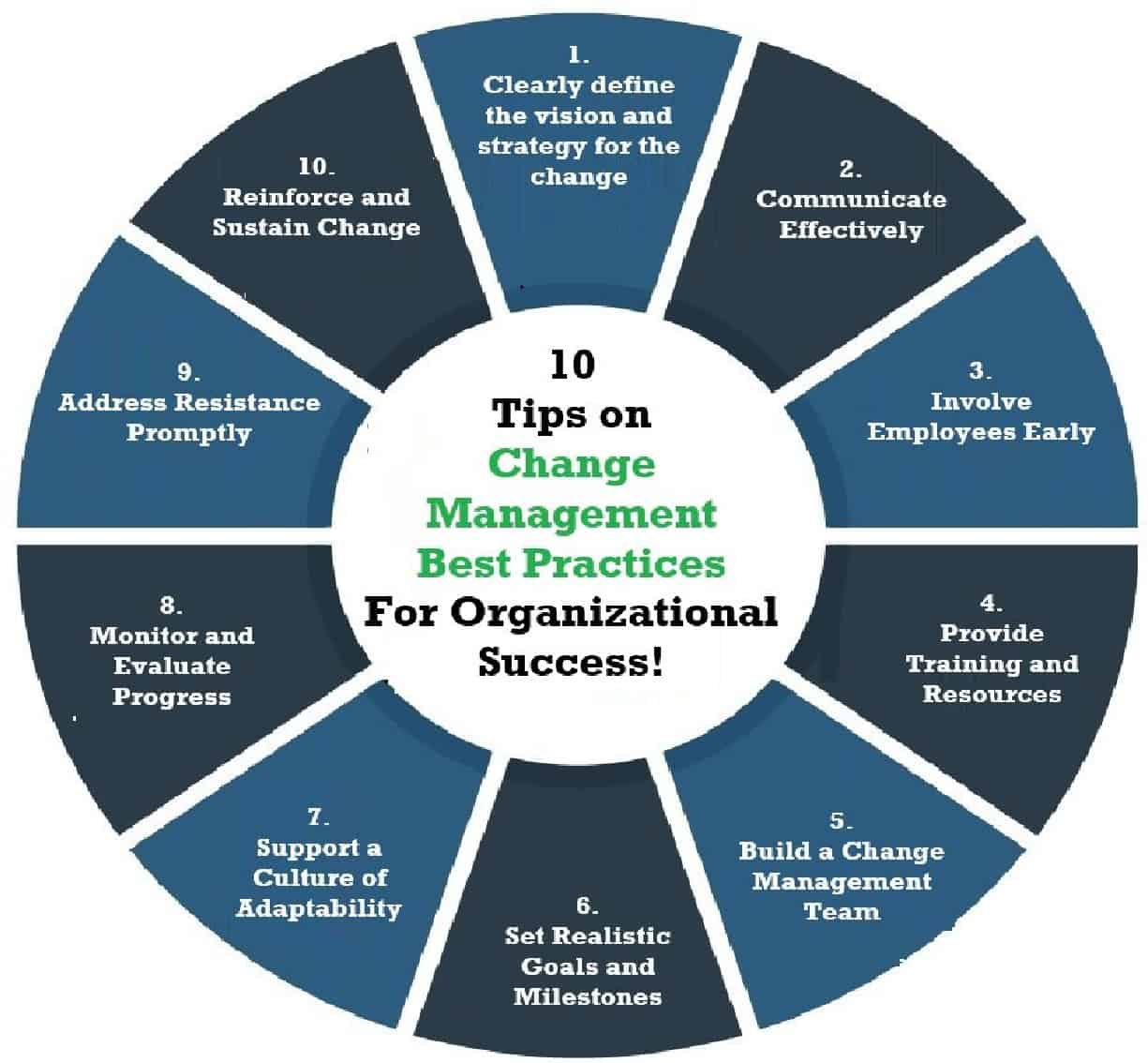
Most organizational change efforts don’t fail because the strategy was wrong. They fail because the people side of change was ignored. Research consistently shows that a majority of change initiatives fall short of their goals, not due to flawed technology or poor planning, but because leaders underestimate resistance, communication gaps, and the human cost of transition. Change management is a structured approach to moving individuals, teams, and organizations from where they are to where they need to be. This article walks you through proven models, practical steps, and real-world strategies to make your next organizational transition stick.
Table of Contents
- What is change management and why does it matter?
- Core methodologies: which change management models make the difference?
- The mechanics of leading change: steps every organization should follow
- Real-world nuances: overcoming common roadblocks in change efforts
- How to drive lasting success: embedding change in your culture
- Boost your change management results with expert support
- Frequently asked questions
Key Takeaways
| Point | Details |
|---|---|
| Change management defined | It is a structured approach that guides people and organizations through transitions for successful adoption and outcomes. |
| Proven methodologies matter | Frameworks like Kotter and ADKAR provide actionable steps that help reduce failure rates in change initiatives. |
| Continuous reinforcement | Long-term success depends on reinforcing new behaviors and cultural habits after initial implementation. |
| Anticipate resistance | Leaders should expect resistance and change fatigue and address them proactively through communication and support. |
What is change management and why does it matter?
At its core, change management is the discipline of making corporate transitions successful by focusing on people, not just processes. A structured approach to transitioning individuals, teams, and organizations from a current state to a desired future state is what separates organizations that evolve from those that stagnate. Without it, even the most well-funded initiatives collapse under the weight of confusion, disengagement, and unmanaged resistance.
“Change without a management framework is just disruption. With one, it becomes transformation.”
The business scenarios that demand structured change management are broader than most executives realize. Whether you’re navigating a merger, rolling out new enterprise software, restructuring departments, or shifting your organizational culture, each scenario carries unique risks that require deliberate management. Explore tailored change management approaches to understand how different contexts call for different solutions.
Here are the most common situations where change management is non-negotiable:
- Mergers and acquisitions: Aligning two distinct cultures and operational systems
- Technology implementations: Driving adoption of new platforms or digital tools
- Restructuring: Redefining roles, reporting lines, and team compositions
- Cultural transformation: Shifting values, behaviors, and leadership styles at scale
- Regulatory compliance shifts: Adapting processes to meet new legal or industry standards
- Strategic pivots: Redirecting the organization toward new markets or business models
Reviewing change management best practices before launching any initiative gives your leadership team a significant advantage.
Core methodologies: which change management models make the difference?
Not all change management frameworks are built the same. The right model depends on your organization’s size, culture, and the nature of the change itself. Key methodologies include Kotter’s 8-Step Model, ADKAR, Lewin’s 3-Stage, Prosci’s 3-Phase, and McKinsey 7-S, each with a distinct focus and application.
Here’s a quick breakdown of each:
- Kotter’s 8-Step Model: Creates urgency, builds a guiding coalition, forms a vision, communicates it, empowers action, celebrates short-term wins, consolidates gains, and anchors change in culture
- ADKAR: Focuses on individual change through Awareness, Desire, Knowledge, Ability, and Reinforcement
- Lewin’s 3-Stage: Simplifies change into Unfreeze (prepare), Change (execute), and Refreeze (stabilize)
- Prosci’s 3-Phase: Prepares, manages, and reinforces change with a strong emphasis on sponsorship
- McKinsey 7-S: Aligns seven organizational elements: strategy, structure, systems, shared values, style, staff, and skills
Use this comparison to match the right model to your situation:
| Model | Focus area | Key strength | Best use case |
|---|---|---|---|
| Kotter’s 8-Step | Organizational momentum | Creates urgency and buy-in | Large-scale cultural or strategic change |
| ADKAR | Individual adoption | Tracks personal change progress | Technology rollouts, behavioral shifts |
| Lewin’s 3-Stage | Simplicity | Easy to communicate and apply | Smaller teams or focused process changes |
| Prosci’s 3-Phase | Sponsorship and reinforcement | Strong executive alignment | Enterprise-wide transformations |
| McKinsey 7-S | Systemic alignment | Holistic organizational view | Post-merger integration or restructuring |
For a deeper look at applying these frameworks, explore effective change management strategies that align with your leadership goals.
The mechanics of leading change: steps every organization should follow
Knowing the models is only half the journey. Here’s how to put theory into concrete action within your organization. The mechanics of change management involve preparing for change, developing a vision and strategy, executing through training and communication, managing resistance, monitoring progress, and reinforcing new behaviors.
- Assess organizational readiness. Before anything else, evaluate your organization’s capacity for change. Survey leaders and frontline staff, identify pockets of resistance, and map out resource constraints. This step prevents costly surprises mid-implementation.
- Define a clear vision and strategy. Ambiguity is the enemy of adoption. Articulate exactly what the future state looks like, why it matters, and what success measures will be used. Make the vision simple enough that every employee can repeat it.
- Develop a communication plan. Communication is not a one-time announcement. Build a multi-channel plan that delivers consistent messages at regular intervals. Tailor messaging for executives, managers, and frontline workers separately.
- Execute with training and support. Roll out training programs that build the specific skills employees need to operate in the new environment. Pair training with coaching and peer support networks to reinforce learning.
- Monitor progress with clear KPIs. Track adoption rates, productivity metrics, and employee sentiment throughout the transition. Use data to identify where the change is stalling and intervene quickly.
- Reinforce and solidify new behaviors. Celebrate milestones, recognize early adopters, and update performance systems to reflect new expectations. Without reinforcement, organizations revert to old habits within months.
Pro Tip: Resistance is not a sign that your change initiative is failing. It’s a signal that people need more information, more involvement, or more time. Address resistance early by creating feedback channels and involving skeptics in problem-solving rather than sidelining them.

For a structured walkthrough of this process, review the change management process and the steps for successful change that high-performing organizations use.
Real-world nuances: overcoming common roadblocks in change efforts
Implementing these steps is rarely linear. Real-life change is full of surprises and challenges, which leaders must be ready for. One of the most effective approaches is combining models like Kotter and ADKAR, using Kotter to drive organizational momentum while ADKAR tracks individual adoption simultaneously.
This hybrid approach works because organizational change and personal change operate on different timelines. Your executive team may be aligned on the vision while frontline employees are still in the awareness stage. Running both frameworks in parallel closes that gap.
Here are the most common roadblocks and practical ways to address them:
- Change fatigue: When employees face multiple overlapping initiatives, energy and engagement drop sharply. Sequence changes where possible and communicate a clear end point for each initiative.
- Decentralized resistance: In large organizations, resistance often lives in middle management, not the frontline. Invest in manager-specific training and make managers visible champions of the change.
- Communication breakdowns: Messages get distorted as they travel down the hierarchy. Use direct channels like town halls, video updates from senior leaders, and team-level Q&A sessions.
- Lack of executive sponsorship: Change without visible leadership commitment stalls fast. Sponsors must be active, not just nominally assigned.
- Insufficient resources: Underestimating the time, budget, and personnel needed for change is a top reason initiatives fail. Build a realistic resource plan before launch.
Pro Tip: If your organization has a Project Management Office, integrate your change management activities directly into the PMO’s portfolio tracking. This ensures change efforts are resourced, scheduled, and reported alongside technical deliverables, rather than treated as a soft add-on.
For practical guidance on navigating these challenges, review organizational change tips and consider how consulting for business growth can provide external perspective when internal teams are too close to the problem.
How to drive lasting success: embedding change in your culture
Once you’ve executed a structured approach, it’s vital to consider how to make change permanent and prevent backsliding. Reinforcement is not a phase that ends at go-live. It’s an ongoing leadership responsibility that spans months and sometimes years.
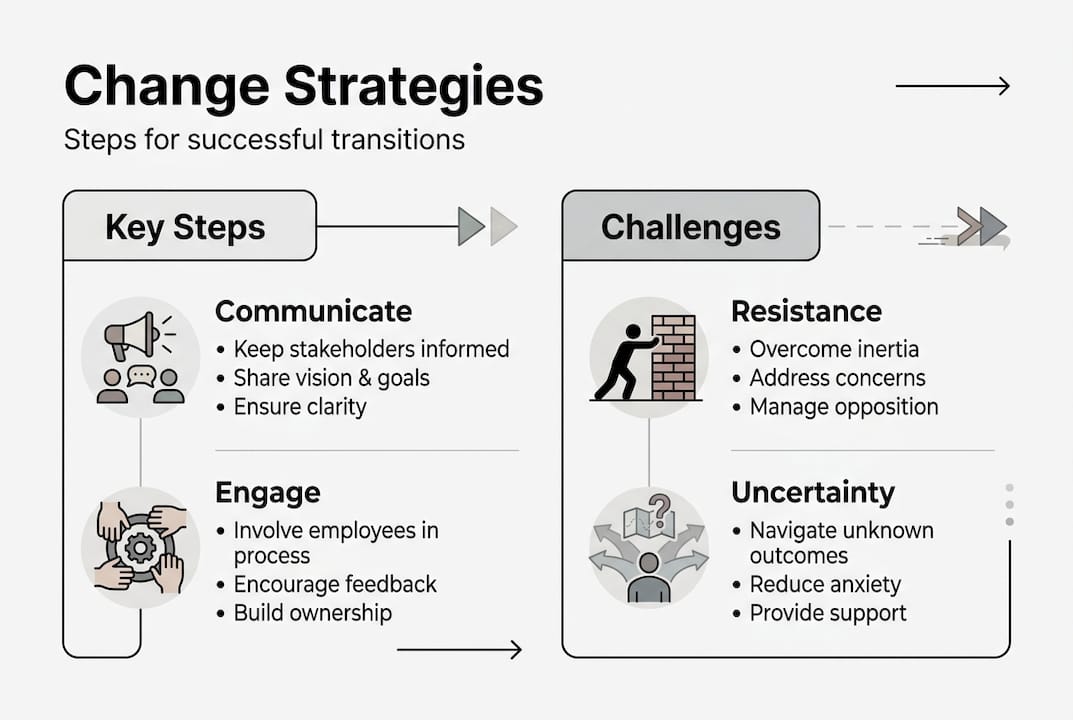
The solidifying and reinforcing changes phase requires deliberate activities at each stage of the post-launch period. Here’s a practical timeline for sustaining change:
| Timeframe | Key activities | Leadership actions |
|---|---|---|
| Month 1 | Monitor adoption rates, address early resistance | Hold weekly check-ins, celebrate quick wins |
| Month 3 | Assess KPI progress, adjust training gaps | Share data transparently, recognize champions |
| Month 6 | Evaluate cultural embedding, update processes | Anchor change in performance reviews and onboarding |
Leadership behavior is the single most powerful signal employees use to judge whether a change is real or temporary. When leaders visibly model new behaviors, use new systems, and reference the change in everyday decisions, the organization follows. When leaders revert to old habits, so does everyone else.
“Organizations that invest in structured change management are significantly more likely to meet project objectives, stay on schedule, and stay on budget than those that don’t.”
Building change capability into your culture also means developing internal change agents at every level. These are managers and team leads who understand change principles, can spot resistance early, and know how to coach their teams through uncertainty. For organizations looking to scale this capability, growth strategies with consulting can help you build internal change leadership that outlasts any single initiative.
Boost your change management results with expert support
No matter where your organization is on its change journey, specialized guidance can accelerate success and reduce risks. Selecting the right framework, sequencing your initiatives correctly, and building internal capability are decisions that benefit enormously from experienced outside perspective.
At Dumex Business Consult, we work with executives and managers to design and implement change strategies that are tailored to your organization’s specific context, culture, and goals. Our change management services are built around measurable outcomes, not generic templates. We also offer total quality management consulting to help organizations embed operational excellence alongside their change efforts, ensuring that transitions lead to lasting performance improvements rather than short-term fixes. Reach out to our team to discuss how we can support your next transition.
Frequently asked questions
What is the main goal of change management?
The main goal of change management is to guide people, teams, and organizations through transitions so that new ways of working are adopted successfully and business outcomes are achieved.
Which change management model is best for large organizations?
Large organizations often benefit from combining Kotter and ADKAR, using Kotter to drive organizational momentum and ADKAR to track individual adoption at the same time.
How can we reduce resistance to change in our organization?
Active communication, transparency, and leadership involvement are the most effective tools. The managing resistance phase of any structured change process should include dedicated feedback channels and employee involvement in solution design.
What are common mistakes organizations make during change?
The most frequent mistakes include inadequate planning, poor communication, ignoring change fatigue and resistance, and failing to reinforce new behaviors after go-live. Skipping the reinforcement phase is especially costly because it allows organizations to drift back to old habits.