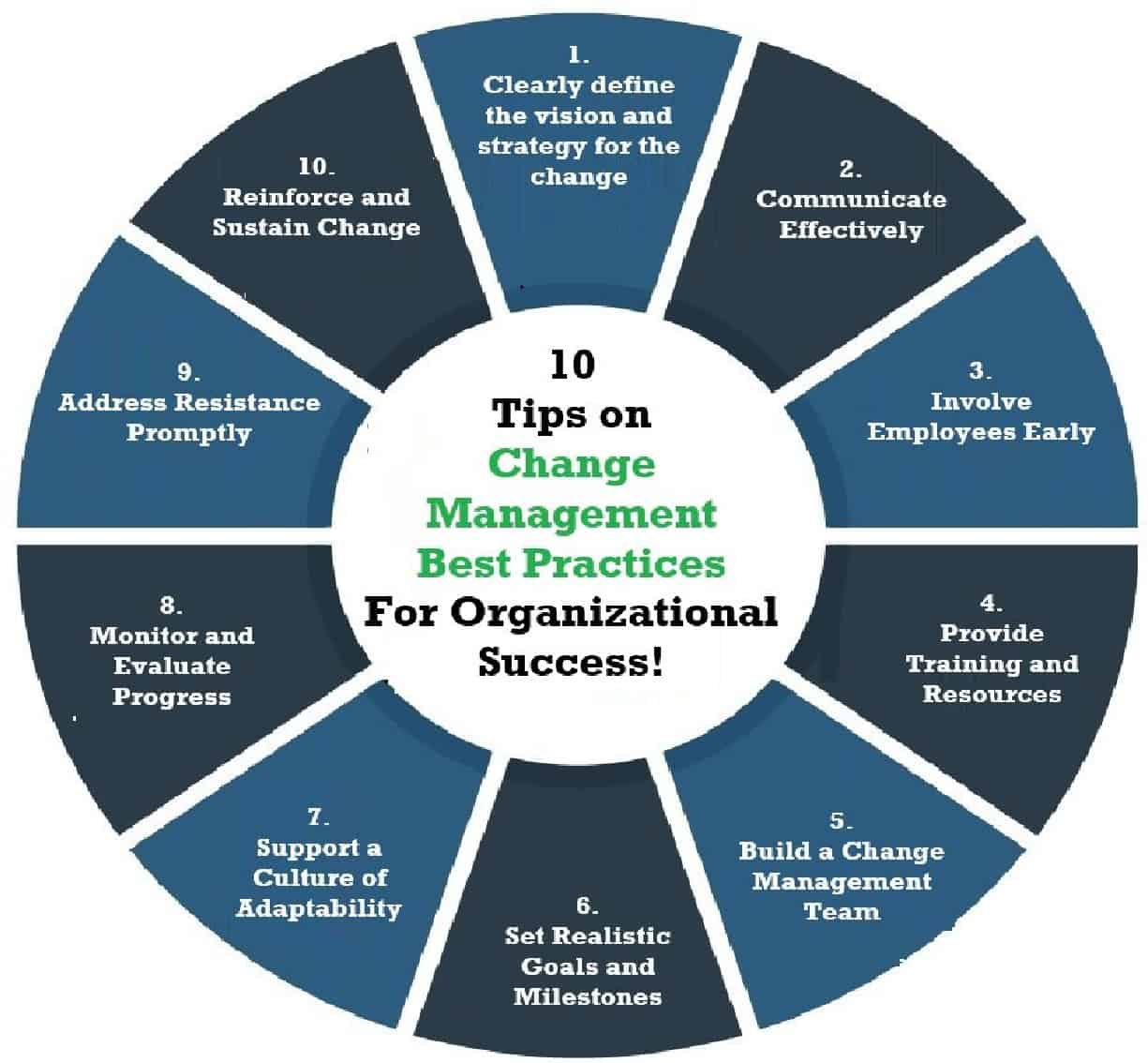
Selecting the right change management strategy can determine whether your organizational transformation succeeds or stalls. With project success rates jumping from 13% to 88% when structured approaches are applied, the stakes are high. Multiple proven frameworks exist, each with distinct strengths suited to different organizational contexts. This guide explores leading change management strategies, compares their core features, and provides decision criteria to help you choose and implement the approach that aligns with your team’s needs, culture, and transformation goals for sustainable results.
Table of Contents
- Criteria For Selecting Change Management Strategies
- Top Change Management Strategies Explained
- Comparing Change Management Strategies Side By Side
- Choosing The Right Strategy For Your Organization
- Boost Your Change Management Success With Dumex Business Consult
- Frequently Asked Questions
Key takeaways
| Point | Details |
|---|---|
| Structured approaches boost success | Organizations applying formal change management see project success rates climb from 13% to 88%. |
| Leadership and engagement drive outcomes | Visionary leadership combined with strong stakeholder involvement forms the foundation for effective change. |
| Resistance stems from predictable sources | Fear, inadequate training, and organizational inertia are the primary barriers to successful transitions. |
| Digital transformation requires embedded change | Integrating change management into technology initiatives ensures long-term adoption and sustainability. |
| Context determines strategy fit | Organizational size, culture, resource availability, and change scope guide optimal strategy selection. |
Criteria for selecting change management strategies
Before diving into specific frameworks, establish clear evaluation criteria that align with your organizational reality. The right strategy must fit your culture, match your leadership style, and work within available resources. Consider whether your organization values top-down directives or collaborative decision-making, as this shapes which approach will gain traction.
Assess the type of change you’re implementing. Digital transformation demands different tactics than process improvements or structural reorganizations. Evaluate stakeholder engagement levels honestly. Teams with low trust or high resistance need strategies emphasizing communication and individual support, while aligned organizations can move faster with system-focused models.
Resource availability matters significantly. Some frameworks require dedicated change teams, extensive training programs, and months of preparation. Others offer leaner approaches suitable for organizations with constrained budgets or tight timelines. Review your past change initiatives to identify patterns. Which communication methods resonated? Where did resistance emerge? What leadership behaviors accelerated or hindered progress?
Key evaluation factors include:
- Cultural alignment with collaborative versus directive approaches
- Leadership capacity to sponsor and model change behaviors
- Available budget for training, tools, and dedicated change resources
- Stakeholder readiness and historical response to organizational shifts
- Timeline urgency and flexibility for phased implementation
- Complexity and scope of the intended transformation
Pro Tip: Create a simple scorecard rating each potential strategy against your top five organizational criteria, then involve key stakeholders in reviewing the assessment to build early buy-in.
Aligning your change management overview with these criteria establishes a foundation for selecting frameworks that deliver results. Organizations that skip this evaluation often choose popular models that clash with their culture, wasting resources and eroding trust. Following change management best practices starts with honest organizational assessment.
Top change management strategies explained
Four dominant frameworks have proven their value across industries and change types. Each offers distinct advantages depending on your organizational context and transformation goals.
Kotter’s 8-Step Model provides a sequential roadmap emphasizing urgency and cultural embedding. This approach works exceptionally well for large-scale transformations requiring broad organizational mobilization. The eight steps are:
- Create a sense of urgency around the need for change
- Build a guiding coalition of influential leaders
- Form a strategic vision and initiatives
- Enlist a volunteer army of change champions
- Enable action by removing barriers
- Generate short-term wins to build momentum
- Sustain acceleration through continued improvements
- Institute change by anchoring new behaviors in culture
The ADKAR Model shifts focus to individual transitions, recognizing that organizational change only succeeds when people change. ADKAR stands for Awareness of the need for change, Desire to participate and support, Knowledge of how to change, Ability to implement required skills, and Reinforcement to sustain the change. This framework excels when resistance centers on personal concerns or when technical skills require development.
Lewin’s Change Management Model offers elegant simplicity through three phases: Unfreeze, Change, and Refreeze. Unfreezing prepares the organization by challenging existing mindsets and creating readiness. The Change phase implements new processes, behaviors, or structures with active support. Refreezing stabilizes the new state by embedding changes into standard operations. This model suits incremental improvements and situations where stability matters after transition.

The McKinsey 7-S Framework ensures holistic alignment across seven interdependent elements: Strategy, Structure, Systems, Shared Values, Skills, Style, and Staff. Rather than prescribing steps, this diagnostic tool identifies misalignments that undermine change efforts. Visionary leadership strategies become more effective when all seven elements support the transformation direction.
Research confirms that visionary leadership, stakeholder engagement, and culture alignment are essential for digital transformation success. Selecting frameworks that emphasize these factors increases adoption rates and reduces implementation friction. Organizations applying effective change management tips often combine elements from multiple models to address both system-level and individual-level change dynamics.
Comparing change management strategies side by side
Understanding how these frameworks differ helps you match strategy to situation. Each model addresses resistance differently and requires varying resource commitments.
| Strategy | Primary Focus | Complexity Level | Resource Intensity | Resistance Approach |
|---|---|---|---|---|
| Kotter’s 8-Step | Organizational mobilization | High | High | Build urgency and coalition support |
| ADKAR | Individual transition | Medium | Medium | Address personal barriers systematically |
| Lewin’s Model | Phased stability | Low | Low | Prepare minds before implementing |
| McKinsey 7-S | System alignment | High | Medium | Diagnose and resolve structural conflicts |
Resistance manifests predictably across change initiatives. Fear, lack of training, and organizational inertia create the most common barriers. Kotter’s model counters resistance by creating urgency that overcomes complacency and building coalitions that provide social proof. ADKAR tackles resistance at its root by ensuring individuals understand why change matters personally and possess the skills to succeed.
Lewin’s approach reduces resistance through thorough preparation during the Unfreeze phase, making change feel less threatening. McKinsey 7-S addresses resistance by revealing how misaligned structures or systems create rational reasons for pushback, then fixing those underlying issues.
Key resistance patterns and framework responses:
- Fear of job loss or reduced status: ADKAR builds desire through transparent communication and personal value demonstration
- Skill gaps and competence concerns: ADKAR and Kotter emphasize training and capability building
- Cultural misalignment: McKinsey 7-S and Kotter anchor changes in shared values
- Leadership inconsistency: Kotter’s coalition and McKinsey’s Style element ensure visible commitment
- Change fatigue from past failures: Lewin’s stability focus and Kotter’s quick wins rebuild confidence
Pro Tip: Combine ADKAR’s individual focus with Kotter’s organizational mobilization when facing both personal resistance and system-wide transformation needs, creating complementary support at multiple levels.
Promoting a healthy culture reduces baseline resistance before change initiatives begin. Leaders who develop management skills for change can navigate resistance more effectively regardless of chosen framework.
Choosing the right strategy for your organization
Match your strategy selection to organizational characteristics through systematic evaluation. Follow this decision framework:
- Assess change scope: Small process tweaks suit Lewin’s simplicity, while enterprise-wide digital transformations demand Kotter’s comprehensive approach or McKinsey’s alignment focus.
- Evaluate team readiness: High-trust cultures with change experience can move quickly with Lewin or McKinsey models, while skeptical teams benefit from ADKAR’s individual attention.
- Review resource availability: Limited budgets favor Lewin’s lean approach, while substantial resources enable Kotter’s intensive coalition building and communication campaigns.
- Determine urgency level: Crisis situations require Kotter’s urgency creation, while planned improvements allow Lewin’s gradual unfreezing.
- Identify primary resistance source: If resistance stems from skill gaps, choose ADKAR; if from structural misalignment, select McKinsey 7-S.
- Consider leadership capacity: Kotter demands visible, active executive sponsorship, while Lewin can succeed with competent middle management.
Organizational size influences strategy fit. Small companies with flat structures often find Lewin or ADKAR sufficient, as communication flows easily and personal relationships facilitate buy-in. Mid-sized organizations benefit from ADKAR or McKinsey approaches that balance individual needs with system complexity. Large enterprises typically require Kotter’s structured mobilization to coordinate across divisions and geographies.
Culture type matters enormously. Hierarchical organizations respond well to Kotter’s top-down coalition model. Collaborative cultures prefer ADKAR’s respect for individual concerns. Analytical cultures appreciate McKinsey’s diagnostic rigor. Entrepreneurial cultures favor Lewin’s flexibility and speed.
Research shows that strategic change management implements cost-saving tools effectively even with minimal internal resources when the right framework matches organizational constraints. The key is honest assessment rather than aspirational thinking about resources or readiness.
Pro Tip: Prioritize stakeholder engagement and continuous two-way communication regardless of chosen strategy, as these factors predict success across all frameworks and organizational types.
Integrating business strategy development with change management ensures transformations support broader organizational goals. Effective strategic planning implementation requires deliberate change management strategies that address both technical and human dimensions of transformation.
Boost your change management success with Dumex Business Consult
Selecting the right framework is just the beginning. Successful implementation requires expertise in tailoring strategies to your unique organizational context, engaging stakeholders authentically, and navigating resistance with proven techniques.
Dumex Business Consult specializes in change management services that transform theoretical frameworks into practical results. Our consultants assess your organizational readiness, recommend optimal strategy combinations, and guide implementation to minimize disruption while maximizing adoption. We integrate leadership development, communication planning, and capability building to address change at every level.
Whether you’re launching digital transformation, restructuring operations, or shifting organizational culture, our business strategy consulting ensures change initiatives align with performance goals. Our approach to strategic planning and implementation embeds sustainable change practices that deliver measurable improvements in efficiency, engagement, and competitive positioning.
Frequently asked questions
What change management strategy works best for digital transformation?
Kotter’s 8-Step Model combined with ADKAR elements proves most effective for digital transformation. Kotter creates organizational urgency and mobilization while ADKAR ensures individuals develop necessary technical skills and adoption behaviors. This combination addresses both system-level technology integration and personal capability development.
How do you overcome employee resistance to organizational change?
Address resistance by identifying its root cause, then applying targeted interventions. Provide transparent communication about change rationale, offer comprehensive training to build confidence, involve employees in implementation planning, and celebrate early adopters. ADKAR’s systematic approach to building Awareness, Desire, Knowledge, Ability, and Reinforcement directly counters the most common resistance sources.
What role does leadership play in change management success?
Leadership provides visible sponsorship, models new behaviors, allocates necessary resources, and maintains momentum through setbacks. Effective leaders create psychological safety for experimentation, communicate vision consistently, and hold teams accountable for adoption. Without active leadership engagement, even well-designed change strategies fail to gain traction.
How do you measure change management effectiveness?
Track both leading and lagging indicators. Leading metrics include stakeholder engagement scores, training completion rates, and communication reach. Lagging measures include adoption rates of new processes, performance improvements against baseline KPIs, employee retention during transition, and time to full implementation. Balanced measurement reveals both progress and areas needing adjustment.
Can small organizations use the same change strategies as large enterprises?
Small organizations benefit from simplified versions of enterprise frameworks. Lewin’s three-phase model or streamlined ADKAR work well for smaller teams. The core principles remain valuable, but implementation scales down. Small organizations often move faster due to shorter communication chains and closer relationships, allowing more informal application of formal frameworks.
What is the biggest mistake organizations make in change management?
Skipping thorough preparation and stakeholder engagement represents the most costly error. Organizations often announce changes without building understanding of why change matters or how it benefits individuals. This creates resistance that could have been prevented through proper unfreezing, awareness building, and desire cultivation before implementation begins.