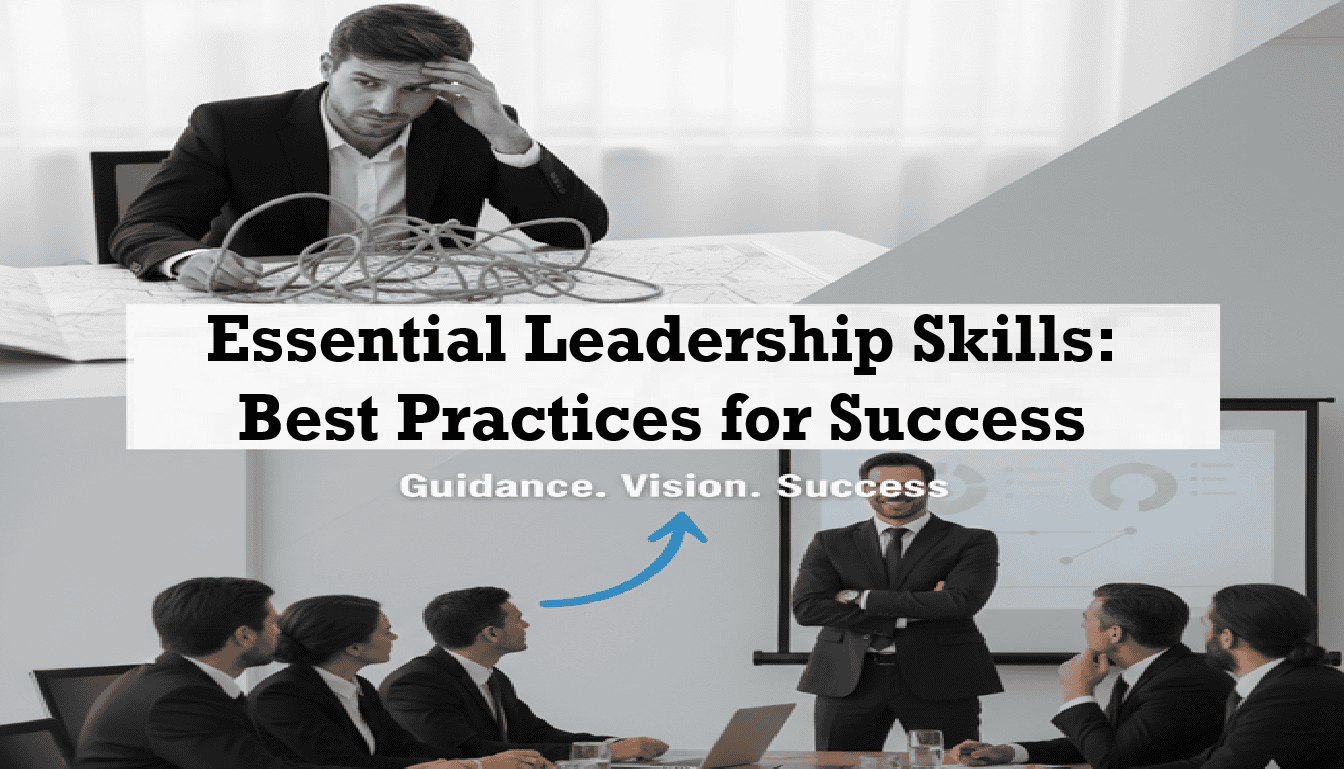
Introduction to Leadership Skills
Leadership skills are fundamental for individuals who aspire to guide teams and organizations toward success. In today’s fast-paced and ever-evolving business landscape, effective leadership goes beyond simply managing tasks—it involves inspiring people, fostering collaboration, and creating a shared sense of purpose. Strong leadership establishes direction, builds trust, and empowers individuals to perform at their highest potential.
Organizations that prioritize leadership development often experience higher levels of employee engagement, improved productivity, and stronger overall performance. Leaders play a pivotal role in shaping workplace culture, influencing how teams communicate, collaborate, and respond to challenges. By understanding and applying key leadership best practices, individuals can significantly enhance their ability to achieve both personal and organizational goals.
Moreover, leadership is not confined to top-level executives. It is a skill that can be developed at all levels of an organization. Whether leading a project team or managing an entire department, cultivating effective leadership capabilities is essential for long-term success.
Effective Communication
One of the most critical leadership skills is effective communication. Leaders must be able to clearly articulate their vision, goals, and expectations to ensure alignment across the team. Clear communication minimizes misunderstandings and provides a sense of direction, enabling team members to work cohesively toward shared objectives.
Equally important is the ability to actively listen. Listening to team members’ ideas, concerns, and feedback fosters an environment of trust and openness. When employees feel heard and valued, they are more likely to contribute meaningfully and remain engaged in their work.
Adapting communication styles to suit different individuals and situations is another key aspect. Some team members may prefer direct and concise instructions, while others may benefit from more detailed explanations. Effective leaders recognize these differences and adjust their approach accordingly. Additionally, providing constructive feedback in a respectful and supportive manner helps individuals grow and improve their performance.
Emotional Intelligence
Another essential leadership skill is emotional intelligence (EI), which involves the ability to understand and manage one’s own emotions while also recognizing and influencing the emotions of others. Leaders with high emotional intelligence are better equipped to handle stress, resolve conflicts, and maintain a positive work environment.
Empathy, a core component of emotional intelligence, allows leaders to connect with their team members on a deeper level. By understanding employees’ perspectives and challenges, leaders can provide appropriate support and guidance. This not only strengthens relationships but also enhances team cohesion and morale.
Emotional intelligence also contributes to resilience. In times of uncertainty or difficulty, emotionally intelligent leaders remain composed and focused, setting a positive example for their teams. Their ability to navigate complex interpersonal dynamics ensures that challenges are addressed constructively rather than becoming obstacles to progress.
Continuous Development
A commitment to continuous development is a defining characteristic of effective leadership. The business environment is constantly changing, and leaders must be willing to adapt and grow in response. This requires a proactive approach to learning and self-improvement.
Seeking regular feedback from peers, mentors, and team members provides valuable insights into strengths and areas for improvement. Constructive feedback enables leaders to refine their skills and enhance their effectiveness over time.
Participating in training programs, workshops, and leadership development initiatives can further strengthen capabilities. These opportunities expose leaders to new ideas, tools, and best practices that can be applied in real-world scenarios. Additionally, reading, networking, and engaging with industry experts can broaden perspectives and inspire innovative thinking.
Practical experience also plays a crucial role in leadership development. Taking on new challenges, leading diverse teams, and navigating complex situations help build confidence and competence. Reflecting on these experiences allows leaders to learn from both successes and setbacks.
Conclusion
Mastering leadership skills is an ongoing journey that requires dedication, self-awareness, and a willingness to learn. By focusing on effective communication, emotional intelligence, and continuous development, leaders can adopt best practices that drive success and inspire their teams.
Ultimately, strong leadership is about creating an environment where individuals feel empowered, valued, and motivated to contribute. Organizations that invest in developing capable leaders are better positioned to achieve sustainable growth and navigate future challenges. By embracing these essential leadership principles, aspiring leaders can make a lasting impact and transform their teams into high-performing, cohesive units.