Introduction: The Most Dangerous Leadership Trap
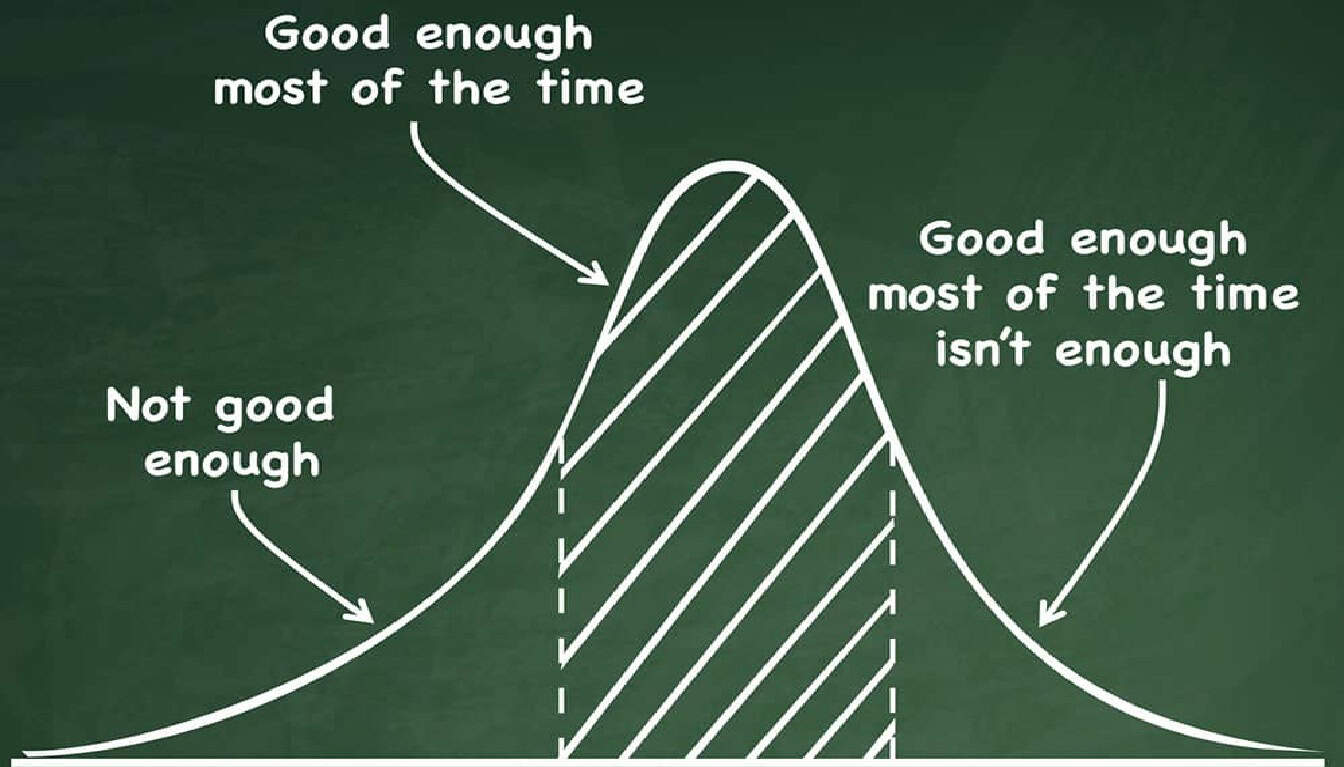
Most organizations don’t fail because of bad leadership.
They fail because of “good enough” leadership.
On the surface, everything appears stable:
- Targets are met (barely)
- Teams are functioning (not thriving)
- Problems are managed (not solved)
There’s no crisis—just quiet underperformance.
And that’s exactly what makes it dangerous.
Because mediocrity doesn’t disrupt the business overnight.
It slowly erodes growth, ambition, and competitive edge over time.
The Real Cost of Complacency
“Good enough” leadership prioritizes comfort over challenge.
Instead of asking “What’s possible?”, it asks “What’s acceptable?”
This shift has significant consequences:
1. Stagnation Becomes the Norm
Without pressure to improve, teams default to maintaining the status quo. Innovation slows, and performance plateaus.
2. Short-Term Thinking Dominates
Leaders focus on hitting immediate targets rather than building long-term capability and advantage.
3. Opportunity Cost Compounds
The biggest loss isn’t what fails—it’s what never gets pursued. New ideas, markets, and innovations are left unexplored.
4. Culture Quietly Declines
Over time, organizations normalize lower standards. Excellence becomes optional instead of expected.
The business may still function—but it stops evolving.
How Mediocrity Shows Up in Leadership
Mediocre leadership is rarely obvious. It hides behind competence.
But the patterns are clear:
- Lack of bold decision-making
- Avoidance of difficult conversations
- Tolerance of underperformance
- Resistance to change or new ideas
- Over-reliance on past success
These behaviors create an environment where teams are not pushed to grow—only to perform within safe limits.
The Talent Drain Effect
Top performers don’t stay in “good enough” environments.
They leave.
Not always immediately—but eventually.
Because high-potential individuals seek:
- Challenge
- Growth
- Clear direction
- High standards
When leadership fails to provide that, engagement drops—and attrition rises.
What remains is a workforce that is:
- Comfortable
- Compliant
- Increasingly average
At that point, mediocrity becomes self-reinforcing.
Why Leaders Fall Into the “Good Enough” Trap
This isn’t usually intentional.
It happens because:
- Success creates complacency
- Pressure encourages risk avoidance
- Complexity leads to decision fatigue
- Stability is mistaken for effectiveness
Leaders optimize for not failing instead of winning.
And over time, that mindset becomes embedded in how the organization operates.
Raising the Standard: From Adequate to Exceptional
Breaking out of mediocrity requires deliberate leadership shifts.
1. Redefine the Performance Bar
Set expectations based on potential—not historical performance.
2. Create a Culture of Constructive Tension
Encourage debate, challenge assumptions, and reward critical thinking.
3. Make Excellence Non-Negotiable
Address underperformance early. Recognize and scale high performance.
4. Prioritize Long-Term Value Over Short-Term Comfort
Invest in capabilities, innovation, and strategic bets—even when outcomes are uncertain.
5. Lead with Clarity and Conviction
Teams perform better when direction is clear and leaders are decisive.
The Leadership Multiplier Effect
The leadership multiplier effect, popularised by Liz Wiseman, is the ability of leaders to amplify the intelligence, skills, and capability of their teams, rather than diminishing them. “Multipliers” create 2x or more capacity by fostering trust, delegating responsibility, and encouraging innovation, leading to higher engagement and better results
Great leadership doesn’t just improve performance—it multiplies it.
When leaders raise standards:
- Teams think bigger
- Execution sharpens
- Innovation accelerates
- Accountability strengthens
The entire organization shifts from maintaining performance to maximizing potential.
Organizations that sustain excellence also institutionalize leadership development, ensuring future leaders inherit high standards, not comfortable habits that dilute performance over time.
The Bottom Line
“Good enough” leadership is not harmless.
It’s expensive.
It costs:
- Growth
- Talent
- Innovation
- Competitive advantage
And unlike obvious failures, it often goes unaddressed—until it’s too late.
The real question for leaders isn’t:
“Are we performing?”
It’s:
“Are we performing at our full potential—or just staying comfortable?”
Because in today’s environment, comfort is the fastest path to irrelevance.
And the organizations that win are not led by those who settle.
They’re led by those who refuse to accept “good enough.”