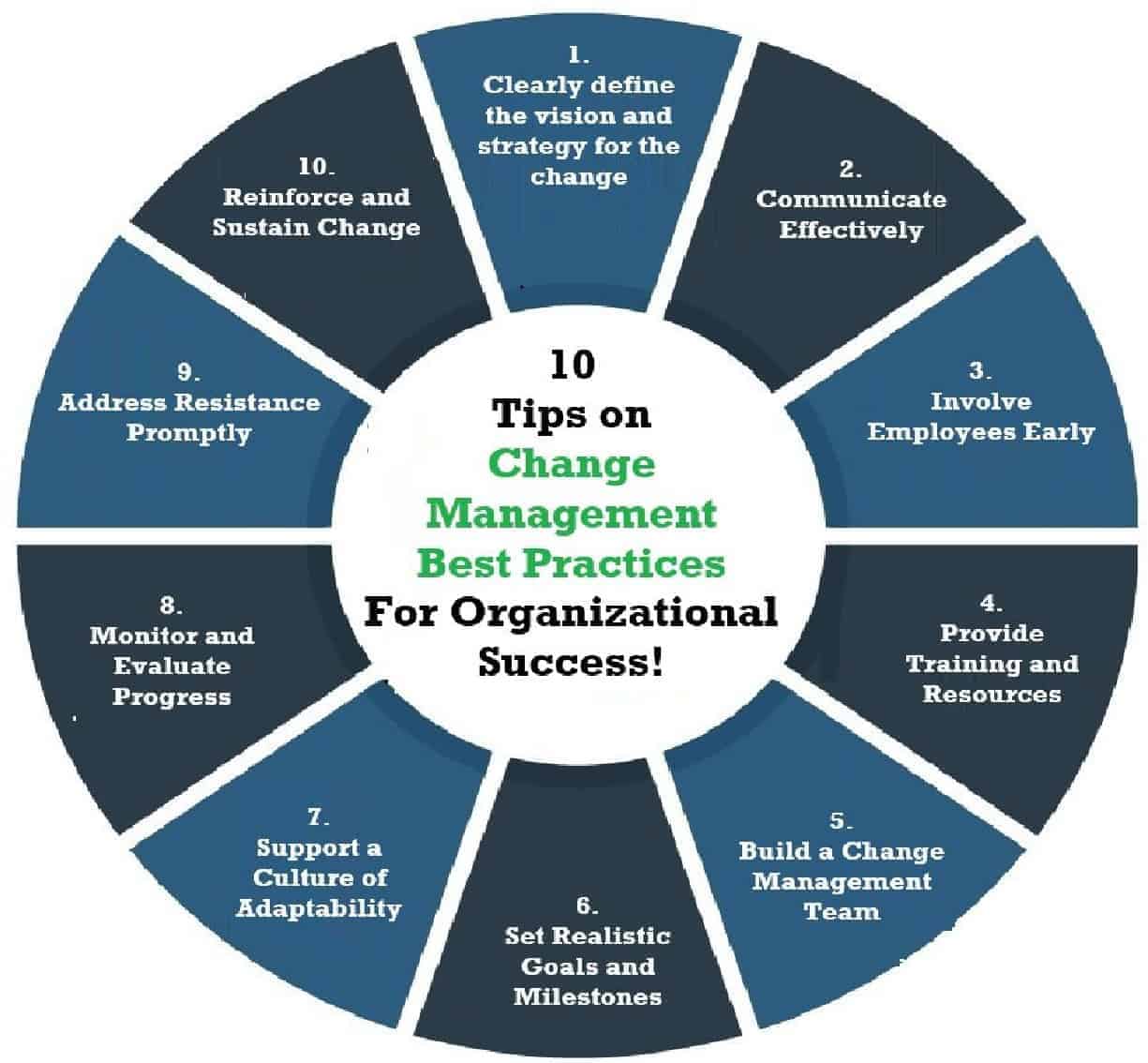
Most change initiatives don’t fail because of a bad idea. They fail because of poor execution, weak leadership alignment, and no structured process to guide people through the transition. 70% of organizational change initiatives fail due to poor planning and execution, a number that should give every corporate leader pause. The good news is that failure is largely preventable. When you follow a deliberate, step-by-step framework, you dramatically improve your odds of success. This article walks you through the proven steps to plan, implement, and sustain organizational change so your next initiative actually delivers results.
Table of Contents
- Define the vision and prepare for change
- Engage stakeholders and build commitment
- Design, communicate, and implement the change plan
- Monitor, reinforce, and sustain the change
- A practical perspective: What most change management guides miss
- Need support with organizational change? Here’s how we help
- Frequently asked questions
Key Takeaways
| Point | Details |
|---|---|
| Clear vision matters | A well-defined vision sets the foundation for successful change management. |
| Stakeholder engagement is crucial | Involving the right people early boosts acceptance and reduces resistance. |
| Structured communication wins | Consistent and transparent communication accelerates adoption of new initiatives. |
| Monitor and reinforce | Ongoing measurement and support are necessary to sustain change in the long term. |
Define the vision and prepare for change
Having established why structure is essential, we begin with the foundational step: envisioning and preparing for change. Before you move a single process or restructure a single team, you need a clear, compelling answer to one question: Why are we changing, and where are we going? Without that answer, every subsequent step becomes harder.
Organizations with a clearly articulated vision are 3.5 times more likely to succeed in change initiatives. That statistic alone should make vision definition a non-negotiable first step, not an afterthought. A strong vision does more than describe a future state. It gives people a reason to move toward it.
Once your vision is defined, conduct an honest organizational readiness assessment. This means evaluating your current culture, leadership alignment, resource availability, and capacity for change. Many leaders skip this step and pay for it later when resistance surfaces mid-implementation.
Here’s what a solid preparation phase should cover:
- Vision statement: Clear, specific, and tied to business outcomes
- Leadership alignment: All senior leaders must understand and publicly support the change
- Stakeholder mapping: Identify who will be affected and how
- Readiness gaps: Document cultural, structural, or skill gaps that could slow adoption
- Risk identification: Flag potential roadblocks before they become crises
Following change management best practices at this stage means treating preparation as a strategic investment, not a formality. The organizational change management process only works when the foundation is solid.
Pro Tip: Involve a cross-functional group of leaders in drafting the vision. When people help shape the direction, they feel ownership over the outcome.
Engage stakeholders and build commitment
With the vision established, the next step involves rallying the people who will bring it to life. Stakeholder engagement is where many well-designed change plans quietly collapse. Leaders assume that announcing the change is the same as communicating it. It is not.
Employee engagement increases change initiative success by up to 33%. That number reflects a simple truth: people support what they help create. Your job as a leader is to move stakeholders from passive recipients of change to active participants in it.
Start by segmenting your stakeholders into two groups. Primary stakeholders are those directly impacted by the change, including frontline employees, team managers, and department heads. Secondary stakeholders include customers, suppliers, and board members who are affected indirectly. Each group needs a tailored communication approach.
Here’s a practical process for building commitment:
- Map influence and impact: Identify who has the most influence and who faces the most disruption.
- Tailor your message: Speak to what each group cares about. Finance leaders want ROI. Frontline staff want job security and clear expectations.
- Create feedback channels: Two-way communication is non-negotiable. Hold listening sessions, surveys, and open forums.
- Identify change champions: Find respected informal leaders who can advocate for the change within their teams.
- Address resistance early: Don’t wait for resistance to become obstruction. Engage skeptics directly and listen to their concerns.
“People don’t resist change. They resist being changed.” This distinction shapes how effective leaders approach engagement. When people feel heard and involved, they are far more likely to commit.
Applying strong change management leadership strategies at this stage turns potential resistors into advocates. A successful organizational transition depends on the quality of relationships you build before implementation begins.
Design, communicate, and implement the change plan
Once you’ve secured commitment, structured planning and communication is critical for effective implementation. This is where vision becomes action. A well-designed change plan bridges the gap between where you are and where you want to be, with specific steps, owners, timelines, and decision checkpoints.
Structured communication plans reduce resistance and speed adoption. This is why your implementation plan must include a communication strategy, not just a project timeline. People need to know what’s happening, why it’s happening, and what it means for them, repeatedly and through multiple channels.
Here’s a comparison of reactive versus structured implementation approaches:
| Factor | Reactive approach | Structured approach |
|---|---|---|
| Planning | Ad hoc, adjusted as issues arise | Detailed roadmap with milestones |
| Communication | Announcements when needed | Scheduled, multi-channel updates |
| Accountability | Unclear ownership | Defined roles and responsibilities |
| Resistance handling | Addressed after escalation | Proactively anticipated and managed |
| Flexibility | Reactive to disruption | Built-in review and adaptation points |
The structured approach consistently outperforms reactive execution because it reduces ambiguity. People know what to expect, who is responsible, and how progress will be measured.
Pro Tip: Build a 30-60-90 day communication calendar at the start of implementation. Consistent touchpoints prevent the information vacuum that fuels rumors and anxiety.
When designing your plan, balance speed with flexibility. Moving too fast creates confusion. Moving too slowly loses momentum. Build in formal review points where you assess what’s working and adjust accordingly. Following a proven change management process and applying change management best practices at this stage keeps execution disciplined without becoming rigid.
Monitor, reinforce, and sustain the change
To ensure new behaviors take hold and deliver long-term value, monitoring and reinforcement are essential. Implementation is not the finish line. It’s the beginning of the hardest part: making the change stick.

Continuous reinforcement and measurement are necessary for change sustainability. Without deliberate reinforcement, people naturally drift back to familiar habits, especially when the pressure of daily operations returns.
Here’s a snapshot of key metrics to track at different stages:
| Stage | Metric | Purpose |
|---|---|---|
| Early adoption | Participation rates | Gauge initial engagement |
| Mid-implementation | Process compliance | Measure behavioral shift |
| Post-implementation | KPI improvement | Confirm business impact |
| Long-term | Retention of new behaviors | Verify sustainability |
Beyond metrics, reinforcement requires active leadership behavior. Recognition matters. When leaders visibly celebrate early wins and acknowledge teams who adopt new behaviors, it signals that the change is real and permanent. Silence, on the other hand, breeds doubt.
Here are the key reinforcement actions that drive sustainability:
- Coaching and support: Provide ongoing guidance, not just initial training
- Performance integration: Embed new behaviors into performance reviews and KPIs
- Regular check-ins: Schedule structured reviews to assess progress and surface issues
- Celebrate milestones: Publicly recognize teams and individuals who model the change
- Adapt the plan: Use data and feedback to refine your approach as conditions evolve
Applying best practices for organizational change during this phase means treating sustainability as a managed discipline, not a hoped-for outcome. Revisiting your organizational change management process regularly ensures that early progress doesn’t erode over time.
A practical perspective: What most change management guides miss
Most change management frameworks are built on logic. They assume that if you follow the right steps, people will follow. But organizations are not machines. They are ecosystems of relationships, informal power structures, and deeply held beliefs about how things should work.
What we’ve seen repeatedly is that middle managers are the real pivot point in any change initiative. They translate strategy into daily behavior. Yet most frameworks treat them as a communication channel rather than a critical influencer group. When middle managers are uncertain, skeptical, or quietly resistant, the change stalls at exactly the layer where it needs to accelerate.
The other gap most guides miss is the informal influence network. Every organization has people who aren’t in leadership titles but carry enormous social credibility. Ignoring them is a strategic mistake. Engaging them early, even informally, can shift the cultural momentum faster than any formal communication plan.
Our experience with effective change management insights confirms that the leaders who succeed aren’t just better at following frameworks. They’re better at reading people, adapting in real time, and building trust at every level of the organization. The framework gives you the map. Context and human judgment help you navigate the terrain.
Need support with organizational change? Here’s how we help
Knowing the steps is one thing. Executing them under real organizational pressure is another. At Dumex Business Consult, we work directly with corporate leaders to design, implement, and sustain change that delivers measurable results.

Our change management solutions are built around your specific context, not a generic template. Whether you need support with business strategy consulting to align your leadership team or access to leadership training resources to build internal change capability, we have the expertise to guide you. Our approach starts with a thorough assessment of where you are, then builds a tailored roadmap to where you need to be. Reach out to our team today and take the first step toward a change initiative that actually sticks.
Frequently asked questions
What are the most critical steps for effective change management?
Defining a clear vision, engaging stakeholders early, building a structured implementation plan, and applying continuous reinforcement are the steps that separate successful initiatives from failed ones.
How can leaders overcome resistance to change?
Involving stakeholders before decisions are finalized and using structured communication plans to address concerns directly and consistently reduces resistance more effectively than top-down mandates.
Why do many change initiatives fail?
70% of change initiatives fail primarily because of poor planning, insufficient leadership alignment, and a lack of sustained follow-through after the initial rollout.
How is success measured in change management?
Success is measured through adoption rates, KPI improvements, and sustained behavioral change over time, all tracked against the clear metrics and milestones you set at the start of the initiative.
What frameworks are recommended for organizational change?
Kotter’s 8-Step Process and ADKAR are widely used because they address both the structural and human dimensions of change, with continuous reinforcement built into their design.