Introduction to Project Management Phases
Project management is a structured discipline that ensures projects are delivered efficiently, within scope, on time, and within budget. To achieve this, projects are typically divided into distinct phases that guide teams through the entire lifecycle—from concept to completion.
Understanding these phases is essential for project managers and stakeholders, as it provides clarity, improves coordination, and enhances the likelihood of success. Each phase builds upon the previous one, creating a cohesive framework that supports effective planning, execution, and evaluation.
A well-managed project lifecycle not only ensures successful delivery but also strengthens organizational capabilities for future initiatives.
1. Initiation Phase
The initiation phase marks the beginning of the project and lays the foundation for everything that follows. During this stage, the project idea is evaluated to determine its feasibility and alignment with organizational goals.
Key activities include:
- Defining the project’s purpose and objectives
- Identifying key stakeholders and their expectations
- Conducting feasibility and cost-benefit analysis
- Outlining high-level scope and requirements
A critical output of this phase is the project charter, which formally authorizes the project and provides a clear overview of its goals, scope, and stakeholders.
The initiation phase ensures that the project is viable and worth pursuing before significant resources are committed.
2. Planning Phase
The planning phase is one of the most critical stages in the project lifecycle, as it establishes a detailed roadmap for execution. Effective planning minimizes uncertainties and provides a clear direction for the project team.
During this phase, project managers develop a comprehensive project plan that includes:
- Detailed scope definition and work breakdown structure (WBS)
- Timeline and schedule development
- Resource allocation and budgeting
- Risk identification and mitigation strategies
- Communication and stakeholder engagement plans
Clear roles and responsibilities are assigned to ensure accountability and coordination among team members.
A well-structured plan acts as a blueprint for success, guiding the team through the execution phase while enabling proactive management of risks and challenges.
3. Execution Phase
The execution phase is where the project plan is put into action and deliverables are created. This stage involves coordinating people, resources, and processes to achieve the project objectives.
Key activities include:
- Assigning tasks and managing team performance
- Ensuring effective collaboration and communication
- Implementing project plans and processes
- Managing stakeholder expectations
Strong leadership is essential during execution to maintain momentum, resolve conflicts, and ensure that the team remains aligned with project goals.
The success of this phase depends on how effectively the project plan is implemented and how well the team adapts to real-world challenges.
4. Monitoring and Controlling Phase
While often combined with execution, the monitoring and controlling phase is a continuous process that ensures the project stays on track. It involves tracking progress, measuring performance, and making necessary adjustments.
Key components include:
- Monitoring timelines, costs, and quality metrics
- Comparing actual performance against the project plan
- Identifying and addressing deviations
- Managing risks and implementing corrective actions
Regular reporting and communication with stakeholders are essential to maintain transparency and alignment.
This phase enables project managers to maintain control and ensure that objectives are met despite uncertainties and changes.
5. Closure Phase
The closure phase marks the formal completion of the project. It ensures that all deliverables are finalized, approved, and handed over to stakeholders.
Key activities include:
- Verifying that all project objectives have been achieved
- Obtaining stakeholder approval and sign-off
- Documenting lessons learned and best practices
- Releasing resources and closing contracts
This phase is crucial for evaluating project success and capturing insights that can improve future projects.
Effective project closure ensures a smooth transition and reinforces organizational learning.
The Importance of an Integrated Approach
Each phase of project management is interconnected, and success depends on how well they are integrated. A weakness in one phase can impact the entire project lifecycle.
Organizations that adopt a structured and disciplined approach to managing these phases benefit from:
- Improved efficiency and productivity
- Better risk management
- Enhanced stakeholder satisfaction
- Consistent project outcomes
By understanding and mastering each phase, project managers can deliver projects more effectively and contribute to organizational success.
Conclusion
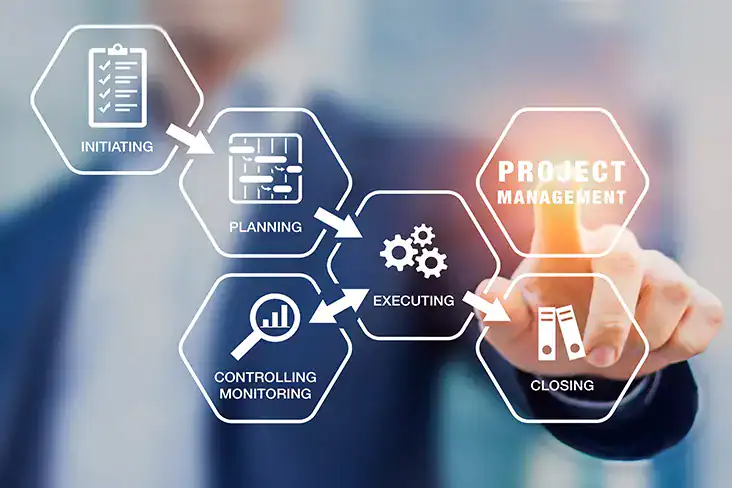
The phases of project management—initiation, planning, execution, monitoring and controlling, and closure—provide a comprehensive framework for managing projects from start to finish. Each phase plays a vital role in ensuring that objectives are met and value is delivered.
In today’s complex business environment, mastering these phases is essential for achieving successful outcomes. Organizations that apply these principles consistently are better equipped to manage complexity, adapt to change, and deliver projects that drive growth and innovation.