Many business leaders pour significant resources into improvement initiatives, only to watch results plateau or disappear within months. The frustration is real: you invest in new tools, restructure teams, and set ambitious targets, yet the needle barely moves. The difference between organizations that break through and those that stagnate usually comes down to one thing: a structured, evidence-backed approach that connects diagnosis to execution to measurement. This guide walks you through exactly that process, giving you a practical framework to identify what is holding your organization back, set goals that actually drive action, and build momentum that lasts.
Table of Contents
- Diagnosing performance bottlenecks
- Setting smart, measurable goals
- Implementing effective strategies for improvement
- Monitoring progress and pivoting strategies
- Avoiding common pitfalls and troubleshooting issues
- Unlock your next level of business performance
- Frequently asked questions
Key Takeaways
| Point | Details |
|---|---|
| Start with root causes | Assess internal performance gaps before launching improvement efforts. |
| Set measurable objectives | SMART goals ensure improvement is systematic and results-driven. |
| Execute proven strategies | Combine process optimization, change management, and skill building for maximum impact. |
| Monitor and adapt | Track progress and adjust quickly to keep momentum and improve outcomes. |
| Leverage expert support | Consulting partners can help address challenges and accelerate business growth. |
Diagnosing performance bottlenecks
Before you can fix a performance problem, you need to know exactly where it lives. Many organizations skip this step and jump straight to solutions, which is why so many improvement initiatives fail to stick. A proper diagnosis saves you from wasting resources on the wrong problems.
The most common bottlenecks fall into three categories:
- Talent gaps: Skills that your team lacks relative to what your strategy demands
- Inefficient processes: Redundant steps, unclear ownership, or outdated workflows that slow output
- Absent or unclear KPIs: Without defined key performance indicators, teams cannot self-correct
- Communication breakdowns: Information that does not flow between departments, causing duplication and errors
- Technology misalignment: Tools that do not match how work actually gets done
Performance assessment tools help reveal operational gaps that are invisible to leaders who are too close to daily operations. Process mapping, structured employee feedback sessions, and financial reviews are three diagnostic tools that consistently surface the highest-impact issues.
Here is a quick comparison of diagnostic methods and what each one uncovers:
| Diagnostic tool | What it reveals | Best used for |
|---|---|---|
| Process mapping | Redundant steps, handoff failures | Operational workflows |
| Employee feedback surveys | Morale issues, skill gaps, friction points | People and culture |
| Financial performance review | Cost inefficiencies, revenue leakage | Profitability analysis |
| Customer satisfaction data | Service gaps, unmet expectations | Customer-facing processes |
Once you have gathered data from multiple sources, prioritize issues by their impact on revenue, customer experience, or team capacity. Exploring operational excellence frameworks gives you a structured lens for this prioritization. You can also work with consulting services for business growth to accelerate the diagnostic phase with proven methodologies.
Setting smart, measurable goals
Diagnosis without direction is just data. Once you know where your bottlenecks are, you need goals that convert insight into focused action. This is where SMART goals become essential.

SMART stands for Specific, Measurable, Achievable, Relevant, and Time-bound. SMART goals align business strategy with measurable outcomes, which means every team member understands what success looks like and by when.
Here is how traditional targets compare to SMART goals:
| Traditional target | SMART goal equivalent |
|---|---|
| “Improve customer satisfaction” | “Increase NPS score from 42 to 55 by Q3 2026” |
| “Grow revenue” | “Achieve 15% revenue growth in the enterprise segment by December 2026” |
| “Reduce costs” | “Cut operational costs by 10% through process automation by June 2026” |
| “Improve team performance” | “Reduce employee turnover from 18% to 12% within 12 months” |
To build goals that your organization will actually pursue, follow these steps:
- Start with your top three diagnosed bottlenecks and assign a goal to each one
- Define the specific metric that will confirm improvement
- Set a realistic but ambitious target based on current baseline data
- Assign clear ownership to a named individual or team
- Build in a review checkpoint at the halfway mark
Pro Tip: Involve cross-functional teams in the goal-setting process. When people from operations, finance, and sales co-create targets, you get goals that are both realistic and broadly supported. Resistance drops significantly when teams feel ownership over the outcome.
For deeper guidance on connecting goals to long-term direction, strategic business planning resources can help you align short-term targets with your broader vision. You can also explore growth strategies via consulting to see how external expertise accelerates this alignment.
Implementing effective strategies for improvement
With clear goals in place, execution becomes the priority. Three strategies consistently deliver the strongest performance gains across mid-sized organizations: process optimization, technology adoption, and talent development.
Here is a step-by-step approach to putting each one into action:
- Map and redesign core processes. Take your highest-impact workflow and eliminate every step that does not directly add value. Assign clear ownership for each remaining step.
- Integrate technology strategically. Identify one manual process that consumes significant team time and evaluate tools that automate or streamline it. Avoid adopting technology for its own sake.
- Upskill your people. Conduct a skills gap analysis against your current strategy. Build a targeted training plan that addresses the top three gaps within 90 days.
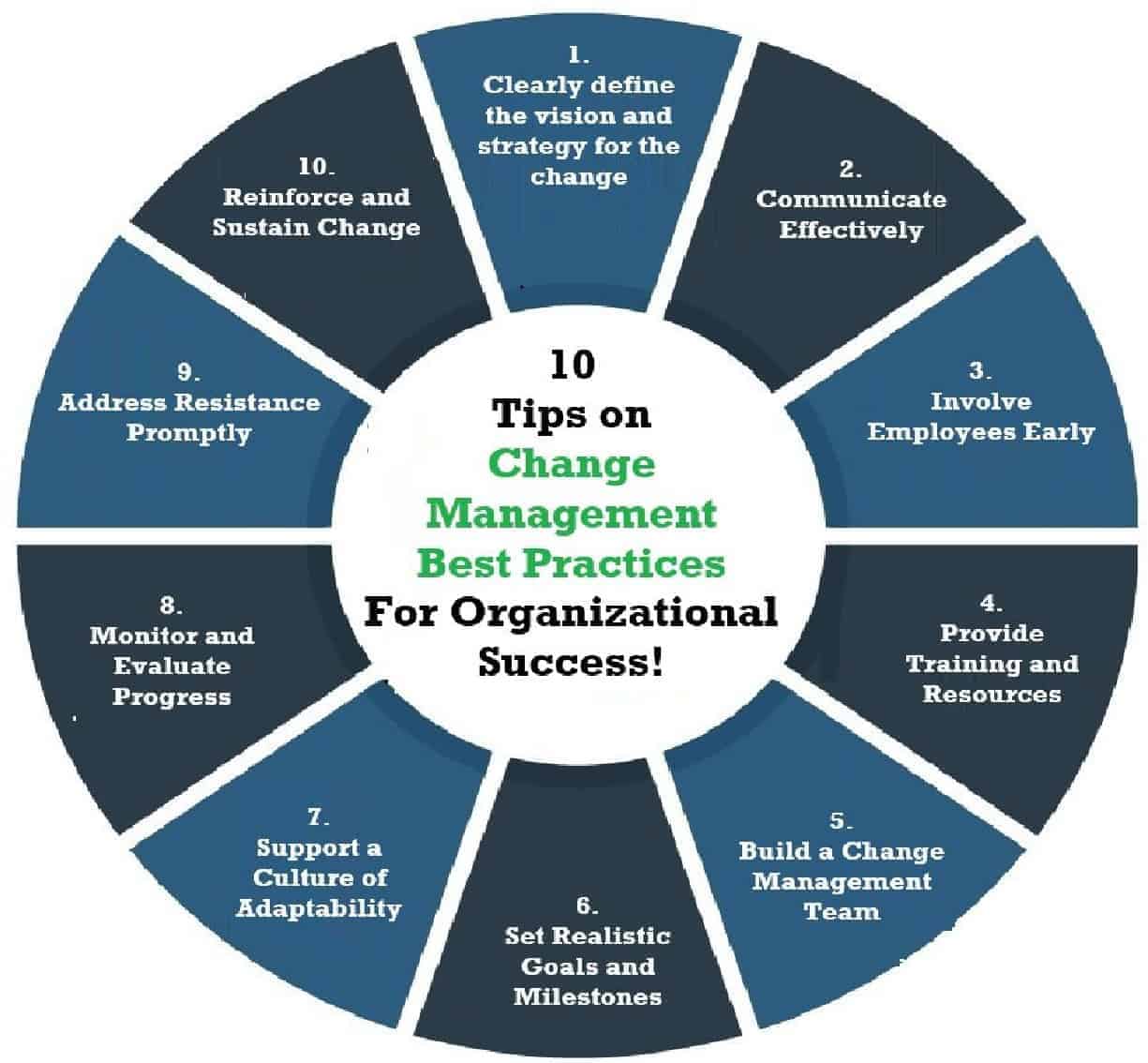
- Apply structured change management. Structured change management enables sustained improvement by ensuring people understand why changes are happening and how they benefit.
- Communicate relentlessly. Share progress updates, celebrate early wins, and address concerns openly. Silence breeds resistance.
Statistic callout: Organizations that apply formal change management practices are six times more likely to meet their project objectives than those that do not.
Pro Tip: Pilot your improvement strategy in one department or team before rolling it out organization-wide. A controlled pilot lets you identify unexpected friction, refine your approach, and build a compelling internal case study that makes broader adoption much easier.
Understanding change management best practices is critical here because even the best strategy fails without people on board. If you want a broader view of how structured support accelerates results, corporate consulting strategies offer a useful framework for thinking about external expertise as a performance lever.
Monitoring progress and pivoting strategies
Implementation without monitoring is guesswork. Once your improvement strategies are running, you need a system that tells you what is working, what is not, and what needs to change.
“What gets measured gets improved.”
That principle is not just a motivational phrase. It reflects how high-performing organizations operate. Continuous monitoring and adaptation are key to sustained success, and the organizations that build this habit outperform those that treat measurement as an afterthought.
Here are the core tools and practices for effective performance monitoring:
- KPI dashboards: Real-time visibility into your most critical metrics, updated at least weekly
- Monthly performance reviews: Structured meetings where teams report on progress against goals and flag obstacles
- Employee pulse surveys: Short, frequent surveys that capture team sentiment and surface emerging issues before they escalate
- Customer feedback loops: Regular collection of satisfaction data to confirm that operational improvements are translating into better experiences
- Financial variance reports: Monthly comparisons of actual versus planned performance to catch cost or revenue deviations early
The key is to build feedback loops, not just reporting systems. A dashboard that nobody acts on is just noise. Assign someone to own each KPI and make it their responsibility to flag when a metric moves outside an acceptable range. For guidance on managing the human side of these changes, the organizational change process is a valuable resource.

Avoiding common pitfalls and troubleshooting issues
Even well-designed improvement programs run into trouble. Knowing the most common failure points in advance gives you a significant advantage.
Here are the pitfalls that most frequently derail performance initiatives, along with practical ways to address them:
- Vague expectations: When teams do not know exactly what is expected of them, effort scatters. Fix this by documenting goals, roles, and success criteria in writing before any initiative launches.
- Resistance to change: People resist change when they feel it is being done to them rather than with them. Involve key stakeholders early and communicate the personal benefits of the change.
- Lack of accountability: Goals without owners do not get achieved. Every initiative needs a named accountable person and a regular check-in cadence.
- Initiative overload: Trying to improve everything at once dilutes focus and exhausts teams. Prioritize ruthlessly and sequence improvements over time.
- Ignoring early warning signs: Small deviations in KPIs often signal bigger problems ahead. Build a culture where people feel safe raising concerns early.
Consulting guidance helps organizations sidestep major performance obstacles by bringing an outside perspective that internal teams often cannot provide. When you are too close to the work, blind spots are inevitable. Leveraging change management strategies during the troubleshooting phase can also help you course-correct faster and with less disruption.
Unlock your next level of business performance
The strategies in this guide give you a solid foundation, but translating frameworks into real results takes more than a checklist. It takes the right expertise applied to your specific context.

At Dumex Business Consult, we work directly with business leaders to build performance improvement plans that are grounded in your actual data, aligned with your strategy, and designed to stick. Whether you need business strategy solutions to sharpen your direction, change management services to drive adoption across your organization, or HR management consulting to close talent gaps, our team brings the structured approach and industry experience to move you forward. Reach out today to explore a customized improvement plan built around your goals.
Frequently asked questions
What is the first step in improving business performance?
Start by identifying bottlenecks using analytics, employee feedback, and performance reviews to focus your efforts where they will have the most impact. Data-driven assessment highlights areas needing improvement before you invest in solutions.
Why are SMART goals important for business growth?
SMART goals provide specific, measurable targets that make it straightforward to track progress and hold teams accountable. SMART goals align strategy with outcomes, reducing wasted effort on activities that do not move the needle.
What are proven strategies to improve organizational performance?
Process optimization, change management, and talent development are widely recognized as the highest-impact strategies for boosting performance. Structured change management is especially critical for ensuring improvements are sustainable rather than temporary.
How can I monitor performance improvement effectively?
Track progress using KPI dashboards, monthly reviews, and feedback loops, and assign clear ownership for each metric. Continuous monitoring and adaptation support sustained business growth by keeping your strategy responsive to real-world results.
What common mistakes derail performance improvement projects?
Vague goals, resistance to change, and poor communication are the most frequent causes of failure. Consulting guidance helps organizations sidestep these obstacles by providing structure, accountability, and an objective outside perspective.