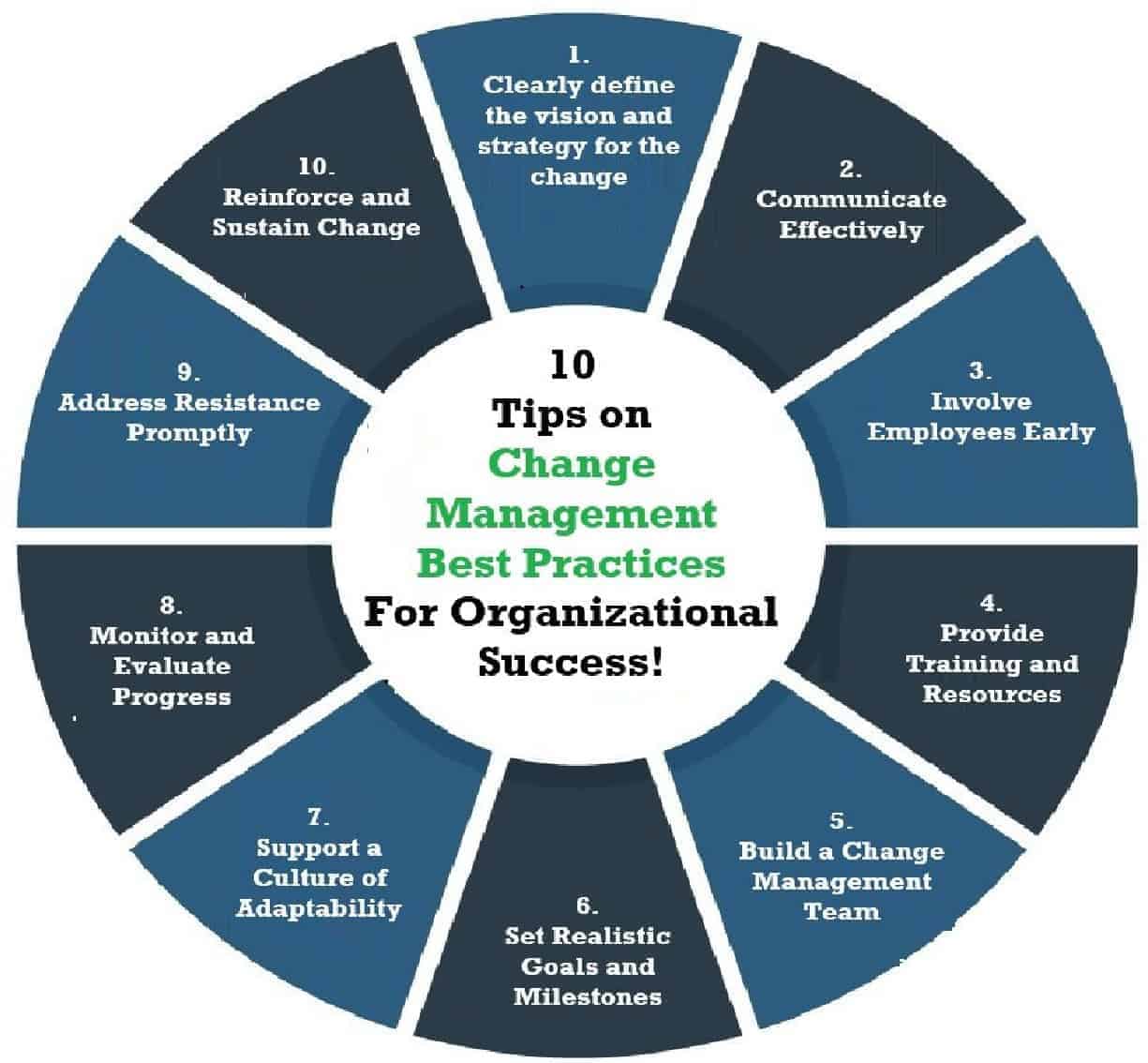
TL;DR:
- A change strategy is a deliberate blueprint that guides transformation efforts, unlike merely announcing initiatives.
- Effective change strategies include clear vision, strong sponsorship, stakeholder engagement, measurable outcomes, risk management, and feedback loops.
- Organizations like Nike and Solvay demonstrate that intentional, tailored strategies driven by leadership increase chances of successful change.
Most leaders assume that announcing a new initiative is the same as having a change strategy. It is not. A change strategy is the deliberate plan that defines what must change, why it matters, who owns it, and how success gets measured. Without it, even well-funded initiatives stall. Strong change capability yields up to 6% more revenue, while weak capability can cost organizations 30% in lost performance. This article breaks down what a real change strategy looks like, which frameworks actually work, and how organizations like Nike and Solvay used structured approaches to deliver results that moved the needle.
Table of Contents
- Defining change strategy: What it is and why it matters
- Core elements of an effective change strategy
- Comparing change strategy frameworks and models
- Real-world examples: Change strategy in action
- Why most change strategies fail — and what really works
- Put your change strategy into action with expert support
- Frequently asked questions
Key Takeaways
| Point | Details |
|---|---|
| Clear strategy drives success | Organizations with strong change strategies see higher revenue and project outcomes. |
| Leadership matters most | Effective sponsorship and leadership ownership are critical for successful transformation. |
| Frameworks boost results | Using proven change strategy frameworks increases on-time and on-budget success rates. |
| Tailoring is essential | Customizing change approaches for each organization delivers outsized performance gains. |
Defining change strategy: What it is and why it matters
Change strategy and change management are not the same thing, though many leaders use the terms interchangeably. Change strategy is the high-level blueprint. It answers the big questions: What are we changing? Why now? What does success look like? Change management, on the other hand, is the operational layer. It handles the communications, training, resistance, and day-to-day execution that make the strategy real for people on the ground.
Think of it this way. Change strategy is the architect’s plan. Change management is the construction crew. You need both, but confusing one for the other is how transformation projects lose direction before they even gain momentum.
A well-designed change strategy typically pursues several core objectives:
- Align leadership around a shared vision for what the organization is becoming
- Clarify priorities so teams know what to focus on first and what to deprioritize
- Define measurable outcomes that tell everyone whether the change is working
- Identify risks before they become expensive surprises
- Build accountability structures so ownership does not drift
The financial case for getting this right is stark. Organizations with strong change capability outperform weaker peers by significant revenue margins, while those without structured approaches often see performance decline. These are not soft outcomes. They show up in quarterly results.
“Change strategy is not a project kickoff slide. It is the decision-making framework that guides every action, resource, and trade-off throughout a transformation.”
Leaders must personally own the strategy, not delegate it to a project manager or HR team. When strategy ownership sits too low in the organization, decisions slow down, priorities shift without coordination, and teams lose confidence in the direction. Explore change management strategies and change management systems to see how structure supports execution at every level.
A common misconception is that change strategy is only relevant for large enterprises. In reality, any organization navigating growth, a market shift, or an operational overhaul needs a clear strategic framework to avoid costly missteps.
Core elements of an effective change strategy
Knowing that you need a change strategy is one thing. Knowing what must go into it is another. The organizations that execute change well share a consistent set of building blocks, regardless of their size or industry.
Here are the essential elements every change strategy should include:
- A clear and compelling vision. People do not resist change. They resist uncertainty. A vision that explains where the organization is going and why it matters reduces anxiety and builds commitment.
- Executive sponsorship with real authority. This is not symbolic. Projects with excellent sponsors succeed 79% of the time, compared to just 27% without strong sponsorship. The sponsor makes decisions, removes barriers, and visibly models the change.
- Stakeholder engagement planning. Different groups are affected differently. A one-size-fits-all communication approach fails because it treats a frontline worker the same as a department head.
- Defined metrics and milestones. If you cannot measure it, you cannot manage it. Build in specific checkpoints to assess whether the strategy is working and adjust when it is not.
- Risk identification and mitigation. Every change creates disruption. Mapping likely resistance points and operational risks before launch gives leaders time to prepare responses rather than scrambling reactively.
- A feedback and learning loop. The best change strategies are not rigid. They include mechanisms to gather input from affected teams and incorporate that learning into ongoing decisions.
Pro Tip: Avoid the temptation to launch multiple change initiatives simultaneously. Organizations that try to change everything at once often end up changing nothing. Sequence your priorities and give each initiative the sponsorship and resources it needs to succeed. Review change management best practices and change management tips for practical sequencing guidance.
When these elements work together, they create alignment across teams and processes. Leaders stop pulling in different directions. Resources get deployed where they create the most impact. And employees feel confident enough to act, rather than waiting to see which way the wind blows.
Comparing change strategy frameworks and models
With the elements in place, leaders face a practical question: which framework should guide the strategy? The good news is that several proven models exist. The challenge is choosing one that fits your organization’s culture, complexity, and timeline rather than applying a framework rigidly because it is popular.
Projects built on strong change frameworks are five times more likely to be delivered on time and on budget. That statistic alone makes the case for choosing deliberately.

Here is a comparison of three widely used frameworks:
| Framework | Best for | Key strength | Watch out for |
|---|---|---|---|
| Kotter’s 8-Step | Large-scale cultural shifts | Creates urgency and momentum | Can feel slow for fast-moving markets |
| ADKAR | People-focused change | Tracks individual adoption clearly | Less useful for systemic or structural change |
| McKinsey 7S | Organizational alignment | Connects strategy to structure and culture | Complex to apply without experienced facilitation |
Each model has a different center of gravity. Kotter’s 8-Step model is sequential and builds momentum through urgency, coalition building, and short-term wins. It works well when an organization needs a cultural shift but can feel slow when market conditions demand rapid pivots.
ADKAR, developed by Prosci, focuses on the individual. It tracks five stages: Awareness, Desire, Knowledge, Ability, and Reinforcement. This makes it particularly useful when resistance is rooted in people’s uncertainty rather than structural problems.
McKinsey 7S takes a systems view, examining how seven interconnected elements (strategy, structure, systems, shared values, skills, style, and staff) must align for change to stick. It is powerful for diagnosing misalignment but requires experienced facilitation to use well.
The pitfall most organizations fall into is treating these frameworks as rigid scripts. They are not. They are thinking tools. The most effective leaders blend elements from multiple models based on what their specific situation demands. Explore strategic change frameworks and change management steps to see how adaptive application works in practice.
- Select a framework based on your change type, not your consultant’s preference
- Adapt elements freely when your context demands it
- Revisit your framework choice if early results are not tracking as expected
Real-world examples: Change strategy in action
Theory becomes convincing when you can see it working. Two organizations stand out for the clarity and impact of their change strategies: Nike and Solvay.
Nike’s direct-to-consumer shift is one of the most studied digital transformations of the past decade. Nike made a deliberate strategic decision to reduce reliance on wholesale retailers and build direct relationships with consumers through digital channels. The results were significant: Nike’s DTC shift delivered digital sales worth 26% of total revenue. That did not happen by accident. It required a clear vision, executive ownership, investment in digital infrastructure, and a willingness to exit relationships with major retail partners.

Solvay’s cost transformation tells a different but equally instructive story. The Belgian chemical company launched a structured performance improvement program that generated €240M in savings. The strategy combined operational redesign with leadership alignment and rigorous measurement.
| Company | Change type | Key outcome |
|---|---|---|
| Nike | Digital and DTC transformation | Digital sales = 26% of revenue |
| Solvay | Cost and operational transformation | €240M in documented savings |
Key stat: Nike’s digital revenue share grew from single digits to 26% of total revenue through a structured, sponsor-led transformation strategy.
What both cases share is intentionality. Neither organization stumbled into results. They defined a strategic direction, built the organizational capability to execute it, and measured progress relentlessly. The lesson for other leaders is not to copy Nike or Solvay’s specific moves. It is to apply the same discipline to your own context. Review effective change strategies and successful organizational change to see how this translates across industries.
Tailored strategies consistently outperform generic ones because they account for the specific culture, constraints, and competitive dynamics of the organization applying them.
Why most change strategies fail — and what really works
Here is something most consulting articles will not tell you: the majority of change strategies fail not because the strategy was wrong, but because it was borrowed. Leaders adopt a popular framework, apply it uniformly, and wonder why it does not take hold.
The uncomfortable truth is that tailored, sponsor-driven strategy with clear metrics is what separates successful transformations from expensive lessons. Generic playbooks do not account for your organization’s culture, your team’s capacity, or the specific resistance patterns you will face.
We have seen organizations invest heavily in change programs that had no executive sponsor willing to make hard calls. The strategy looked good on paper and collapsed in execution. We have also seen lean, focused strategies with modest budgets outperform them because a senior leader owned the outcome personally and measured it weekly.
The other overlooked failure point is measurement. Leaders declare a transformation complete when the project closes, not when the behavior actually changes. Real change takes longer than the project plan suggests. Build in a master change process that extends beyond launch and keeps accountability alive until new behaviors become the default.
Personalization and leadership ownership are not nice-to-haves. They are the strategy.
Put your change strategy into action with expert support
Understanding what a change strategy requires is the first step. Implementing one that actually delivers results is where most organizations need a thought partner who has done this before.

At Dumex Business Consult, we work with organizational leaders to design and execute change strategies built around your specific goals, culture, and performance targets. Whether you are navigating a digital shift, restructuring operations, or building leadership capability, our business strategy consulting services provide the structure and accountability your transformation needs. Explore our business growth strategies to see how we help organizations move from planning to measurable results.
Frequently asked questions
How does change strategy differ from change management?
Change strategy sets the direction and priorities for transformation, while change management focuses on the detailed execution and people aspects. Strong change capability connects both layers to deliver real revenue impact.
What are the top reasons change strategies fail?
Most failures come from unclear objectives, weak sponsorship, and no measurable outcomes to track progress. Sponsors drive a 79% project success rate, making leadership ownership the single biggest factor.
What frameworks are commonly used for change strategy?
Popular frameworks include Kotter’s 8-Step, ADKAR, and the McKinsey 7S model, each suited to different types of change. Strong frameworks increase the likelihood of on-time, on-budget delivery by five times.
Can small organizations benefit from a change strategy?
Yes, tailored strategies help organizations of all sizes improve performance and manage transformation with confidence. Tailored strategies deliver outsized results, as demonstrated by both large enterprises and focused operational programs.
How are results measured in a change strategy?
Results are tracked through targeted KPIs such as project completion rates, ROI, and employee engagement metrics. Projects with strong frameworks are five times more likely to succeed on time and within budget.