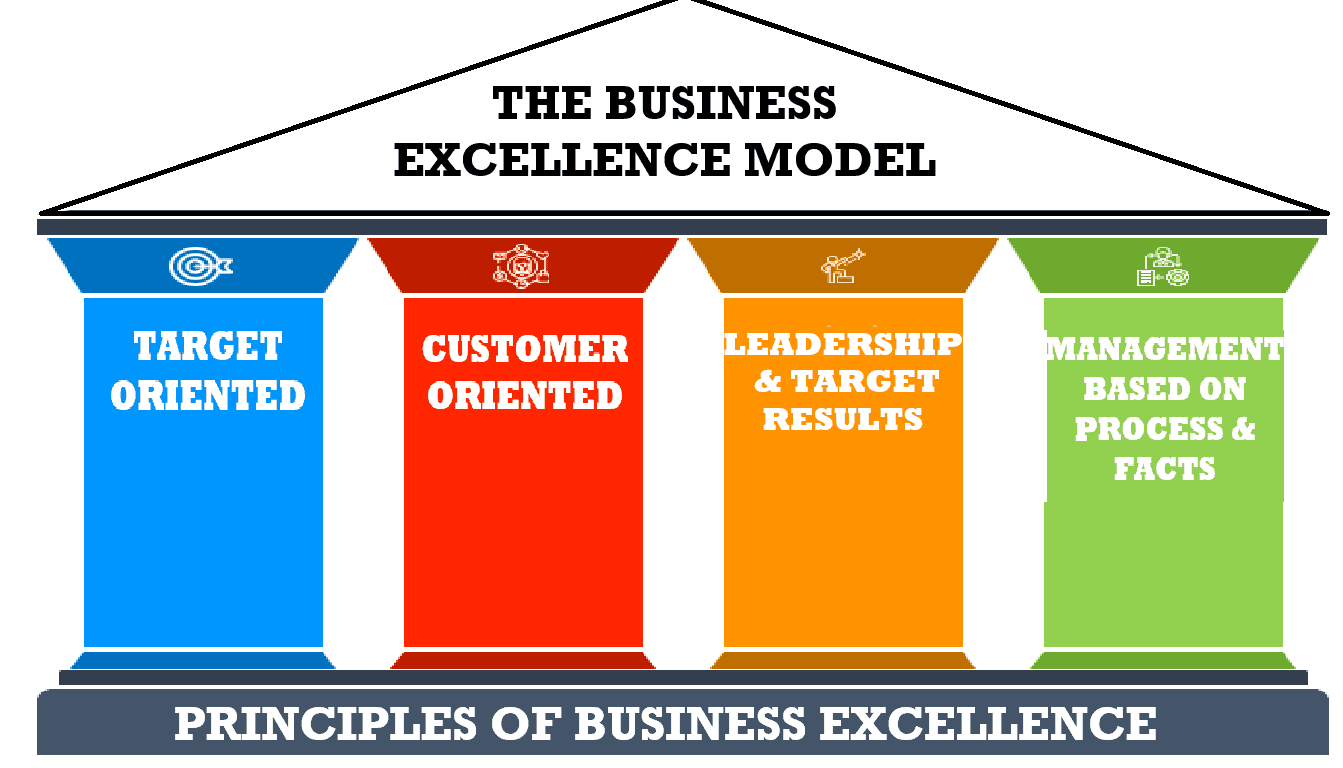
What is the Business Excellence Model?
The Business Excellence Model is a structured framework designed to help organizations achieve superior performance through continuous improvement, strategic alignment, and customer-centricity. It provides a holistic approach to evaluating how an organization operates, identifying strengths, uncovering gaps, and driving sustainable growth.
Rather than focusing on isolated improvements, the model emphasizes integrating leadership, strategy, processes, and people into a cohesive system. Organizations that adopt a Business Excellence Model move beyond short-term fixes and instead build long-term capabilities that enhance resilience, agility, and competitiveness.
Widely used across industries, this model serves as both a diagnostic tool and a roadmap—helping organizations assess their current maturity while guiding them toward higher levels of performance and innovation.
Key Components of the Business Excellence Model
At its core, the Business Excellence Model is built on several interconnected components that collectively drive organizational success:
1. Leadership
Strong leadership is the foundation of business excellence. Leaders are responsible for setting vision, defining strategic direction, and fostering a culture of accountability and high performance. Their commitment to excellence shapes organizational values and drives alignment across all levels.
2. Strategy
A clear and well-defined strategy ensures that organizational efforts are aligned with long-term objectives. The model emphasizes translating vision into actionable plans, ensuring that resources, priorities, and initiatives are focused on delivering measurable results.
3. Customer Focus
Organizations must deeply understand and anticipate customer needs to remain competitive. A strong customer focus ensures that products and services consistently deliver value, enhance satisfaction, and build long-term loyalty.
4. Measurement, Analysis, and Knowledge Management
Data-driven decision-making is critical for excellence. This component focuses on collecting, analyzing, and leveraging data to monitor performance, identify trends, and support informed decision-making. Effective knowledge management ensures that insights are shared and applied across the organization.
5. Process Management
Efficient and well-defined processes are essential for consistent performance. The model encourages organizations to optimize workflows, reduce variability, and standardize best practices, ensuring reliability and quality in all operations.
6. People and Culture
Employees play a central role in achieving excellence. The model highlights the importance of engaging, empowering, and developing talent, fostering a culture where individuals are motivated to contribute to continuous improvement and innovation.
The Benefits of Implementing the Business Excellence Model
Organizations that adopt the Business Excellence Model gain both operational and strategic advantages:
1. Enhanced Organizational Alignment
The model ensures that leadership, strategy, and operations are aligned, enabling organizations to execute their vision effectively and consistently.
2. Culture of Continuous Improvement
By embedding improvement into everyday activities, organizations create a culture where innovation, learning, and performance optimization become standard practice.
3. Improved Customer Satisfaction
A strong focus on customer needs leads to better products, services, and experiences, strengthening customer relationships and brand reputation.
4. Data-Driven Performance Management
The emphasis on measurement and analysis allows organizations to track progress, identify gaps, and make informed decisions, leading to better outcomes.
5. Increased Agility and Resilience
Organizations that follow this model are better equipped to adapt to change, manage risks, and respond to market dynamics, ensuring long-term sustainability.
The Strategic Impact of the Business Excellence Model
Beyond improving internal processes, the Business Excellence Model acts as a strategic enabler of growth and competitive advantage. It helps organizations transition from reactive problem-solving to proactive performance management, where decisions are guided by data, strategy, and long-term objectives.
By integrating all aspects of the business into a unified framework, the model ensures that improvements are not fragmented but instead contribute to holistic organizational transformation. This approach is particularly valuable for companies seeking to scale operations, enter new markets, or drive digital transformation initiatives.
Conclusion
The Business Excellence Model is more than a framework—it is a comprehensive approach to achieving sustainable success in a complex and competitive business environment. By focusing on leadership, strategy, customer value, data-driven insights, and continuous improvement, organizations can build strong foundations for long-term growth.
For executives and decision-makers, adopting this model represents a commitment to excellence, innovation, and performance. Organizations that embrace the Business Excellence Model are better positioned to deliver consistent value, adapt to change, and maintain a lasting competitive edge.