
Most executives believe their transformation initiatives will succeed, yet 88% of business transformations fail to achieve their original ambitions. This staggering statistic reveals a critical gap between intention and execution in organizational change. Understanding what business transformation truly means and implementing proven strategies separates successful leaders from those trapped in cycles of failed initiatives. This guide clarifies the definition, explores common pitfalls, examines digital transformation’s role, and provides actionable frameworks to help you drive sustainable growth and competitive advantage.
Table of Contents
- Understanding Business Transformation: Definition And Scope
- Why Do So Many Business Transformations Fail? Common Challenges And Pitfalls
- The Role Of Digital Transformation In Modern Business Change
- Strategies For Successful Business Transformation: Frameworks And Leadership
- How Dumex Business Consult Supports Your Business Transformation Journey
Key takeaways
| Point | Details |
|---|---|
| Fundamental change required | Business transformation involves comprehensive changes in operating models, processes, technology, and culture to achieve exponential performance improvements. |
| High failure rates | Most transformations fail due to poor execution, resistance to change, and leadership applying technical solutions to adaptive challenges. |
| Digital distinction | Digital transformation represents a deep socio-technical reconfiguration that creates new organizational identities beyond traditional IT changes. |
| Strategic frameworks essential | Successful transformations require clear frameworks, adaptive leadership, and multi-phase approaches that address cultural and behavioral challenges. |
| Significant ROI potential | The 30% of successful transformations deliver 3-5 times ROI, market share gains, and sustainable competitive advantage. |
Understanding business transformation: definition and scope
Business transformation is a fundamental change in how an organization operates to achieve dramatically better performance. Unlike incremental improvements that yield marginal gains, transformation aims for exponential results, typically 3-5 times current performance levels. This distinction matters because it shapes expectations, resource allocation, and leadership commitment from the outset.
The scope of business transformation encompasses strategic evolution across multiple dimensions. Organizations must rethink their operating models, redesign core processes, adopt new technologies, and reshape cultural norms simultaneously. Each element interconnects, creating a complex web of dependencies that require careful orchestration. When leaders treat transformation as a technology upgrade or process tweak, they miss the comprehensive nature of true organizational change.
Effective transformation focuses on better performance while adapting to evolving market demands. This dual objective requires balancing short-term operational improvements with long-term strategic positioning. You cannot transform successfully by copying competitors or following generic playbooks. Instead, align transformation efforts with your unique business strategy, competitive context, and organizational capabilities.
Key aspects of business transformation include:
- Operating model redesign to improve efficiency and responsiveness
- Process reengineering that eliminates waste and accelerates value delivery
- Technology adoption that enables new capabilities and business models
- Cultural evolution that supports innovation and continuous improvement
- Leadership development that builds capacity for ongoing change
Clarity on what transformation entails helps set realistic expectations and align stakeholders around common goals. When everyone understands the comprehensive nature of the journey, they can better prepare for the challenges ahead and commit to sustained effort over time.
Why do so many business transformations fail? Common challenges and pitfalls
The statistics paint a sobering picture of transformation success rates. Research shows 70% of business transformations fail due to poor execution, resistance to change, and lack of clear frameworks. Even more concerning, 88% fail to achieve their original ambitions, leaving organizations with disrupted operations, demoralized teams, and wasted resources. These failures stem from predictable patterns that leaders can anticipate and address.
Leadership mistakes rank among the most common causes of transformation failure. Applying technical solutions to adaptive challenges represents the most frequent leadership error. Technical problems have known solutions that experts can implement, while adaptive challenges require people to change their beliefs, behaviors, and ways of working. When leaders treat cultural resistance as a communication problem or strategic misalignment as a planning gap, they miss the deeper adaptive work required.
Employee resistance has intensified in recent years, creating additional headwinds for transformation efforts. Willingness to support organizational change dropped from 74% in 2016 to 43% in 2022. This decline reflects change fatigue from the increasing frequency of transformation initiatives. Workers who have survived multiple failed transformations become skeptical of new efforts, creating a credibility gap that leaders must overcome.
“The most common leadership failure consists of applying technical solutions to adaptive challenges, treating symptoms rather than addressing root causes of organizational dysfunction.”
Common pitfalls that derail transformations include:
- Unclear vision and goals that leave teams confused about direction
- Insufficient stakeholder engagement that breeds resistance and sabotage
- Inadequate resources and support that set initiatives up for failure
- Poor communication that creates anxiety and speculation
- Neglecting cultural factors that determine whether changes stick
Failure often leads to repeated cycles of transformation without addressing underlying problems. Organizations launch new initiatives while old ones still smolder, creating layers of unfinished change that confuse priorities and exhaust resources. Breaking this cycle requires honest assessment of past failures, commitment to different approaches, and patience to see transformation through to completion. Effective change management provides the discipline and frameworks to avoid these predictable traps.
The role of digital transformation in modern business change
Digital transformation represents a deep socio-technical reconfiguration that alters business strategies, organizational structures, innovation processes, and mechanisms of value creation. This definition reveals why digital transformation differs fundamentally from traditional IT implementations. While technology upgrades focus on automating existing processes, digital transformation reimagines how organizations create and deliver value in a connected world.

The transformative power of digital technologies extends beyond operational efficiency. Digital technologies enable new business models, reshape competitive dynamics, and redefine the boundaries of firms and markets. Platform businesses, subscription services, and ecosystem partnerships emerged from digital capabilities that were impossible with previous technologies. These new models create winner-take-most dynamics that pressure traditional organizations to transform or face obsolescence.
Research shows digital transformation involves a new organizational identity compared with IT-enabled organizational transformation. This identity shift requires rethinking fundamental assumptions about how the organization competes, serves customers, and generates revenue. Legacy companies must often cannibalize existing business models to embrace digital opportunities, creating internal resistance from stakeholders invested in the status quo.
| Aspect | IT-Enabled Transformation | Digital Transformation |
|---|---|---|
| Primary focus | Automating existing processes | Reimagining business models |
| Scope of change | Departmental or functional | Enterprise-wide and ecosystem |
| Technology role | Supporting tool | Strategic enabler |
| Organizational impact | Incremental improvement | Identity reconfiguration |
| Competitive effect | Operational efficiency | Market redefinition |
Understanding these distinctions helps organizations plan more effective transformations. Digital initiatives require different governance, investment models, and success metrics than traditional IT projects. Leaders must balance exploiting current capabilities while exploring new digital opportunities, a tension that demands sophisticated innovation management and clear technology strategy.
Pro Tip: Treat digital transformation as an ongoing journey rather than a destination. Technology evolves continuously, requiring organizations to build adaptive capacity and learning mechanisms that enable ongoing evolution rather than one-time change.
Strategies for successful business transformation: frameworks and leadership
Successful transformations share common characteristics that distinguish them from failed efforts. The 30% of successful transformations see 3-5 times ROI, market share gains, and sustainable competitive advantage. These results stem from disciplined approaches that address both technical and adaptive challenges systematically. Leaders who understand this dual nature design transformation initiatives that change systems and people simultaneously.
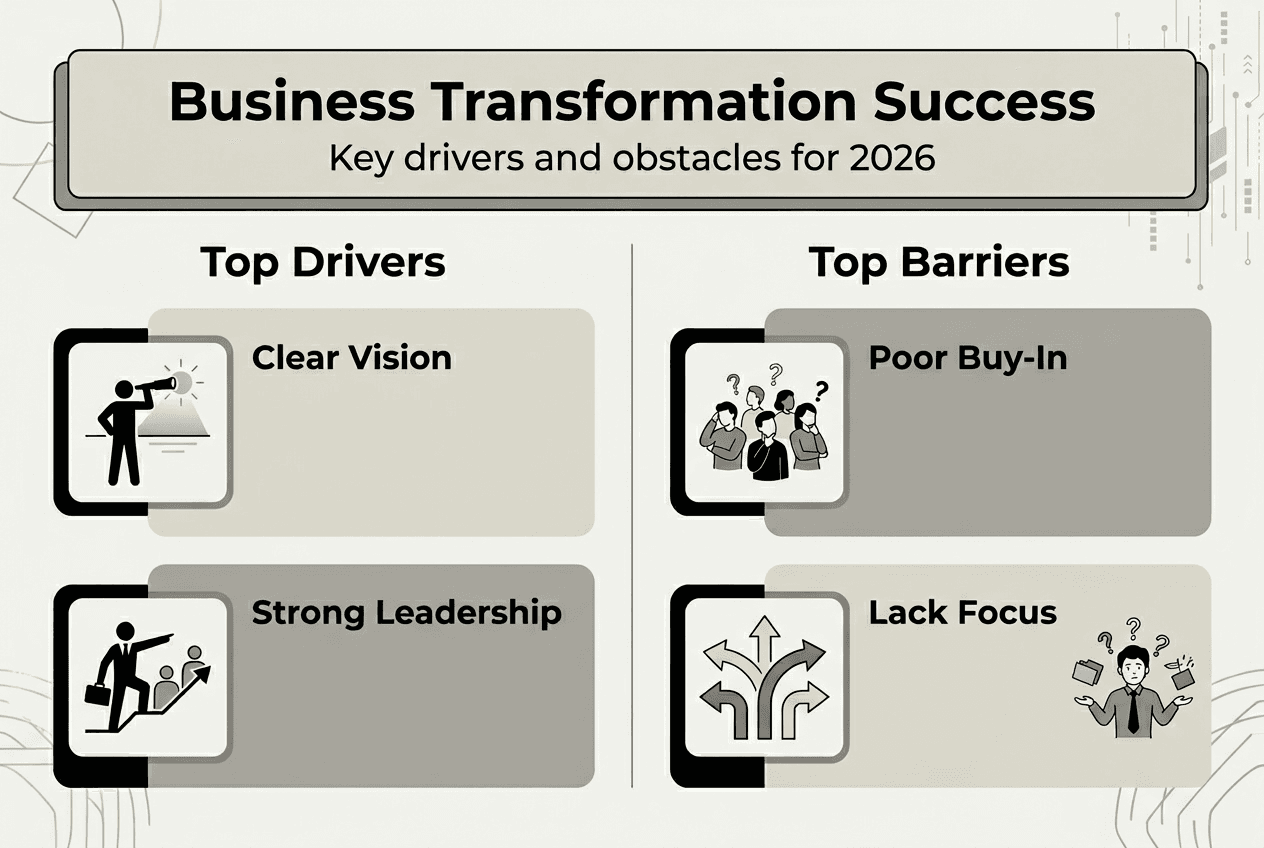
Effective leadership forms the foundation of successful transformation. Applying technical solutions to adaptive challenges represents the most common leadership failure, so successful leaders do the opposite. They recognize when challenges require people to change beliefs and behaviors, then create conditions that support that difficult work. This means tolerating uncertainty, encouraging experimentation, and protecting voices that challenge the status quo.
Implement a multi-phase approach that builds momentum while maintaining focus:
- Diagnose current state honestly, including cultural and capability gaps
- Define compelling vision that connects transformation to organizational purpose
- Design detailed roadmap with clear milestones and accountability
- Deploy resources strategically, prioritizing high-impact initiatives
- Drive execution through disciplined project management and governance
- Review progress regularly, adjusting based on learning and feedback
- Reinforce changes through recognition, metrics, and leadership behavior
Clear frameworks and communication reduce resistance and anxiety throughout the transformation journey. When people understand why change is necessary, what success looks like, and how they contribute, they engage more readily. Transparency about challenges and setbacks builds credibility, while celebrating quick wins maintains energy and demonstrates progress. This communication discipline must start at the top and cascade through all levels.
Engaging employees and aligning the vision are essential steps that many leaders underestimate. Transformation happens through thousands of daily decisions and actions by frontline workers, not just executive pronouncements. Involving employees in designing solutions, soliciting their input on implementation, and addressing their concerns directly increases ownership and reduces sabotage. This participative approach takes more time initially but accelerates execution later.
Pro Tip: Create a dedicated transformation office with authority to coordinate across silos, resolve conflicts, and maintain momentum. This structure prevents transformation from becoming another initiative competing for attention alongside business as usual.
Sustainable transformation yields significant returns that justify the investment and disruption. Organizations that successfully transform improve operational performance, strengthen competitive position, and build capabilities for ongoing adaptation. These benefits compound over time, creating lasting advantages that resist competitive imitation. Partnering with experts in change management best practices, business strategy, and leadership and management accelerates success while reducing risk.
How Dumex Business Consult supports your business transformation journey
Navigating business transformation requires expertise that most organizations lack internally. Dumex Business Consult specializes in guiding executives through successful transformation initiatives that deliver measurable results and sustainable competitive advantage. Our tailored approach begins with deep assessment of your current state, strategic objectives, and organizational capabilities to design transformation roadmaps aligned with your unique context.

Our business strategy services help clarify your transformation vision and prioritize initiatives for maximum impact. We combine this strategic foundation with comprehensive leadership and management programs that build the adaptive capacity your leaders need to guide complex change. Our proven change management frameworks reduce resistance, accelerate adoption, and ensure changes stick long after implementation. Partnering with Dumex means accessing decades of transformation experience, avoiding common pitfalls, and achieving the 3-5 times ROI that successful transformations deliver.
FAQ
What are the key differences between business transformation and digital transformation?
Business transformation encompasses comprehensive organizational change across operating models, processes, culture, and strategy to achieve dramatically better performance. Digital transformation specifically focuses on leveraging digital technologies to create new business models, reshape competitive dynamics, and establish new organizational identities. While digital transformation is a subset of business transformation, it involves deeper socio-technical reconfiguration than traditional IT implementations.
How can leaders reduce resistance to organizational change?
Leaders reduce resistance by communicating the why behind transformation clearly, connecting change to organizational purpose and individual benefits. Involve employees early in designing solutions and implementation approaches to increase ownership. Provide comprehensive training, coaching, and support to build confidence in new ways of working. Address concerns directly and transparently rather than dismissing them. Effective change management practices create psychological safety that enables people to embrace uncertainty and experiment with new behaviors.
What is the typical timeline for business transformation success?
Business transformations typically span 18 months to 3 years depending on scope, organizational complexity, and ambition level. Quick wins should emerge within the first 3-6 months to maintain momentum and demonstrate progress. Sustainable transformation requires multiple phases of diagnosis, design, deployment, and reinforcement rather than one-time implementations. Organizations that rush transformation often fail to address cultural and behavioral changes needed for lasting impact.
Why do many transformation initiatives fail despite good planning?
Many well-planned transformations fail because leaders apply technical solutions to adaptive challenges that require people to change beliefs and behaviors. Good plans address what needs to change but often neglect how to support people through the psychological and social dimensions of change. Poor communication creates anxiety and speculation that breeds resistance. Employee change fatigue from previous failed initiatives creates skepticism that undermines new efforts. Successful transformation requires addressing cultural, behavioral, and emotional factors alongside technical implementation.